How “Field of Dreams” Made Me a Better Father

FMD-Field-of-Dreams

Spoiler Alert! If you have not seen the film this piece abounds with spoilers. And what’s wrong with you that you haven’t seen this film yet?

It was supposed to be a movie about baseball. That’s all I really knew about it as I stood in line waiting for an afternoon showing back in 1989. It was the perfect combination of two of my most favorite things. The bucolic pace of baseball interrupted occasionally with bursts of action, and the cool, dark communal experience of watching a movie in the middle of the afternoon.

So, I was confused when the patrons of the earlier show began to stumble out into the bright light of the afternoon, and I could have sworn that I saw an older gentleman hurry away from the theater in tears.

“Hmmm,” I thought. “Weird.”

The matinee was a momentary escape for my wife and I from our two kids, who were 2 and 7 at the time—a typical afternoon respite from work, kids, responsibility, life.

As the film began, I probably should have paid more attention to the monologue delivered by the Kevin Costner character where Ray Kinsella (Costner) describes the tortured relationship with his father and his desire to not live the dreamless, workaday existence that he perceived was his father’s fate:

Dad was a Yankees fan then, so of course I rooted for Brooklyn. But in ’58, the Dodgers moved away, so we had to find other things to fight about. We did. And when it came time to go to college, I picked the farthest one from home I could find. This, of course, drove him right up the wall, which I suppose was the point. Officially, my major was English, but really it was the ’60s. I marched, I smoked some grass, I tried to like sitar music, and I met Annie. The only thing we had in common was that she came from Iowa, and I had once heard of Iowa.

 Hell, I loved baseball, had majored in English, showed up at some Vietnam War protests because we heard Joan Baez was going to be there (she was), and everyone tried to like sitar music because George Harrison liked it and everyone wanted to like whatever the Beatles liked. I could totally identify with this guy.

In that dark theater, I should have paid closer attention as Ray and the fictional author Terence Mann (James Earl Jones) begin their road trip and Kinsella tells Mann about the effect of one of his books on his relationship with his father:

“By the time I was ten, playing baseball got to be like eating vegetables or taking out the garbage. So when I was fourteen I started refusing. Can you believe that? An American boy refusing to play catch with his father.

Why fourteen?”

That’s when I read “The Boat Rocker,” by Terence Mann.

Oh, God.” (rolling his eyes)

Never played catch with him again.”

You see? That’s the kind of crap people are always trying to lay on me. It’s not my fault you wouldn’t play catch with your father!”

I was completely caught up in the mysticism of the movie and the story of how a dream, any dream, could find fulfillment. How the ball field in Iowa, carved out of his cornfield by Kinsella would provide redemption for Shoeless Joe Jackson and a chance for Moonlight Graham to finally get his first at bats in a big league game. The cornfield also provided the backdrop for Mann to deliver his now famous ode to baseball and its part of the fabric of America where he assures Kinsella that, “People, will come Ray. People will most definitely come.” I was eating up every fantastical theme it was throwing out about redemption, faith, and second chances as avidly as an outfielder diving for a line drive.

So, when Terence Mann drifted off into the cornfield and Shoeless Joe left Ray with one more cryptic message as he pointed to a lone player lingering behind and then left the field, I was completely blindsided. Never saw what the film was really about.

field-of-dreams-25-yrs-slide

Because down at the backstop, the player, a catcher, was still cleaning up his gear alone and unnoticed. The player was Ray’s father, a young man on this magical field, not worn down by life, dreaming of being a big-league ball player, a man with dreams—a man that Ray had never known.

In that moment, Ray and I realized that he had a second chance—a chance to introduce his wife and his father’s granddaughter, a chance to play that game of catch that he had rejected in his youth.

Ok, by now, I’m not crying, I’m weeping. I’ve been so taken by surprise that I’m stunned by the implications of this film and it’s ultimate message. Don’t tell anyone, but I cry at movies, especially ones about sports. I cried at the end of Mighty Ducks II. I cry during about every third episode of Friday Night Lights. Brian’s Song?—forget about it.

This film suddenly flooded me with memories of my dad and thoughts about the father I was trying to become. I had a vivid memory of asking my dad to come and play catch with me. After one or two tosses, I discovered that he had no natural athleticism or feel for the game. He threw so awkwardly that I quickly made up an excuse to cut the session short. As wonderful as he was in so many ways, he did not have this one skill. It was probably the only time that in my youthful ignorance, I felt disappointed in him.

As I grappled with that memory, I was struck hard by thoughts of my own children. I was not an indifferent, neglectful father. I did my share of the chores. In the infant days, I took many turns at late-night feedings and staying home to care for them on days they were sick. I shuttled them to and from day care and pre-school, helped get them dressed every morning, and read books every night.

But having children had both filled a void and torn a hole in my identity that took me years to understand. The all-consuming nature of parenthood had put the brakes on any thoughts about the kind of person I wanted to become outside of parenting and teaching. I probably would never have biked across Europe or climbed Kilimanjaro, but for that period of time I had stopped dreaming.

Even seven years into parenthood, I felt that something was tugging at me that did not allow me to fully embrace the role that I had, to all appearances, fully embraced. I felt an almost constant desire to be relieved from my responsibilities and a tiny, nagging resentment that my life was on hold, that I was missing out on something even if I wasn’t sure what that “something” was.

And absolutely none of this was on my mind when in the dim twilight of the final scene of the film, Costner turned and saw the lone, young catcher. “Oh my god,” I whispered. “It’s his dad.”

It suddenly came crashing down on me that the whole film had been a journey of forgiveness, reconciliation—a second chance for a father and son to “have a catch”, to reaffirm a relationship, to salvage love.

Tears still streaming down my face, it didn’t matter that the ending became awkward and improbable and maybe a little silly; I was too lost between the memories of the son I had been and the father I had become. The singular thought that seared through by brain at that moment was simple, but enduring—you only get one chance to get fatherhood right. One chance.

Outside of Hollywood, there are no do-overs, no cornfields of forgiveness and reconciliation. I realized that I had one chance to be a good dad, maybe an excellent dad, and that already, the years were slipping by quickly.

The film did not so much change the way that I behaved as a father, but it completely changed the way I thought about it. Some of the resentment began to drain away and I more fully accepted everything that came with being a dad.

My clearest memory of how this change affected me came after a long day, after the kids had both been bathed and put to bed and it was my turn to get in the shower. I had to kick away the toys left behind to avoid slipping, tripping or otherwise injuring myself and stood in the stream of hot water and looked about the walls, festooned with colorful, tile stickers the kids had found. Part of me longed to take a shower like an adult, in a clean place without plastic octopi tangling my feet or sea stars staring at me with googly eyes.

And then the thought, the new “Field of Dreams” thought, hit me—look how rich my life is. All of this stuff surrounded me was the stuff of fatherhood and children, of life and love, of the chances that life gives to you only once.
 

Purging vs. Saving: A Dilemma

eyeball


When my children come to visit, I now will frequently present each of them with a “present”—one or more plastic boxes, full of their belongings, which they have decided to store in my garage even though neither of them has spent any serious time living at home for the past seven years.

Clothing, horse show ribbons, plastic horse collections, notebooks from both college and high school, and most especially, college textbooks which I know they will never, EVER open again, populate every free space that I can create. I have made a simple (and I think quite generous) rule regarding retention. If they really want to save it, I’ll keep storing it. But they have to look at everything and make a conscious decision that the object still has value.

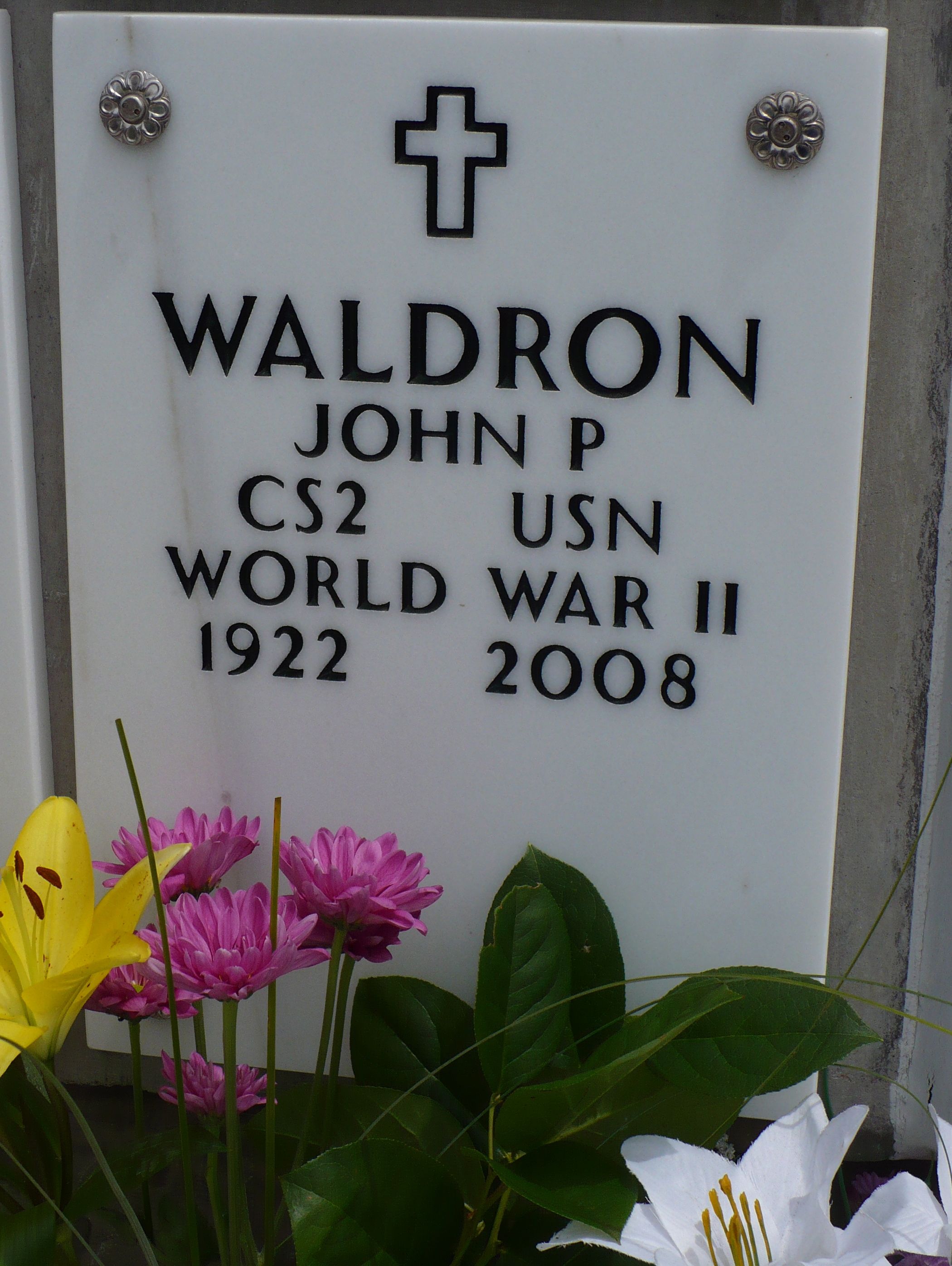
My dedication to purging was inspired by the painful experience of having to empty my mother’s home when, two years after my father’s death, she was injured and precipitously consumed by a dementia that had been creeping into her life. Her condition required that my sister and I place her in a board and care home where her living space was reduced to an 11 x 11 single room from the spacious mobile home that she and my dad had enjoyed for over 30 years.

The “purge” was a combination of an exciting exploration of memorable objects and a tedious and painful exercise in laboriously making decision after decision regarding what was worth keeping. Pictures, jewelry, and silver, antique dinnerware—those were easy decisions to make. Kitchenware made its way to the kids and family members who had a use for it, but most of their furniture was dated and quickly donated. My sister and I created a system for tossing stuff. “You want this?” one of us would ask. If the answer was “no,” it was trash. My parents weren’t hoarders, but they did keep at least 10 ashtrays stored away even though they had both given up smoking over 25 years before. We must have easily filled a dumpster with the life they had formerly lived.

And my mother saved paper. Virtually every document that was related to taxes, investments, bank accounts, insurance, health care—anything that looked vaguely official—was squirreled away into a semi-roll-top desk that someone else is now enjoying because I couldn’t fit it in to my house.

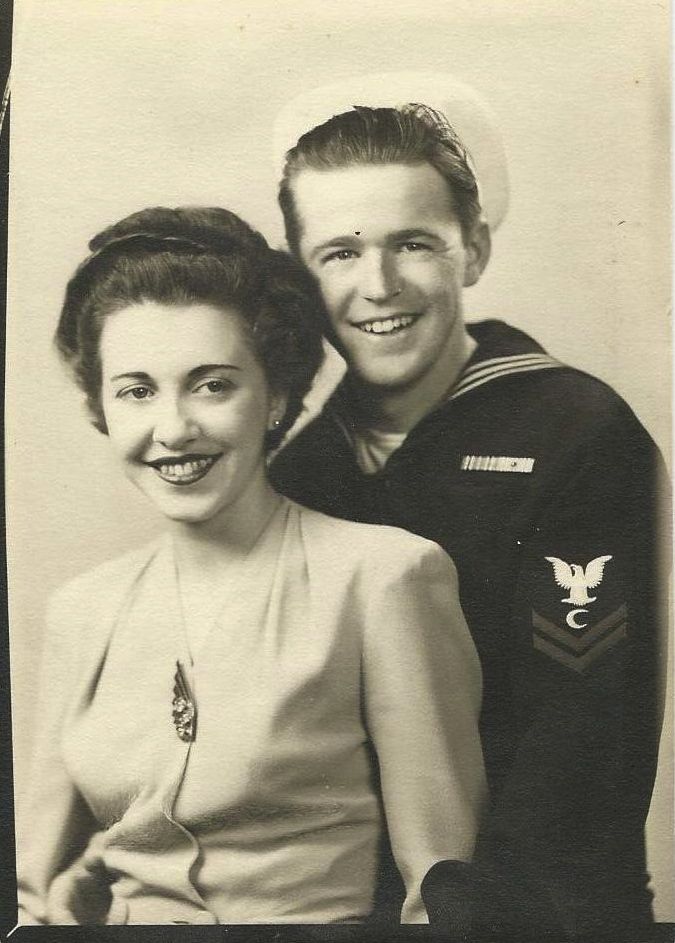
I spent hour after hour looking through every one of these documents to determine what actually needed to be saved. I ended up with four hefty boxes of documents that I deemed to be unimportant and took them to a professional shredding company (who knew such places existed?) but also found my father’s service records from World War II, my parents’ marriage license, birth certificates, and other family records that even I couldn’t bear to part with. These were the tangible evidence of some of the most important aspects of the lives of my parents, and I found myself struggling to let them go. I even kept my grandmother’s Social Security card. Now, when will I need that?

And that’s the crux of it—Irrational Emotional Attachment. IEA.   It’s probably a certified psychological syndrome. If it isn’t, it should be. It causes us to keep around mounds of stuff that no one will ever want, that we will never look at or use. Even someone like me, who likes to get rid of stuff, falls victim to IEA.

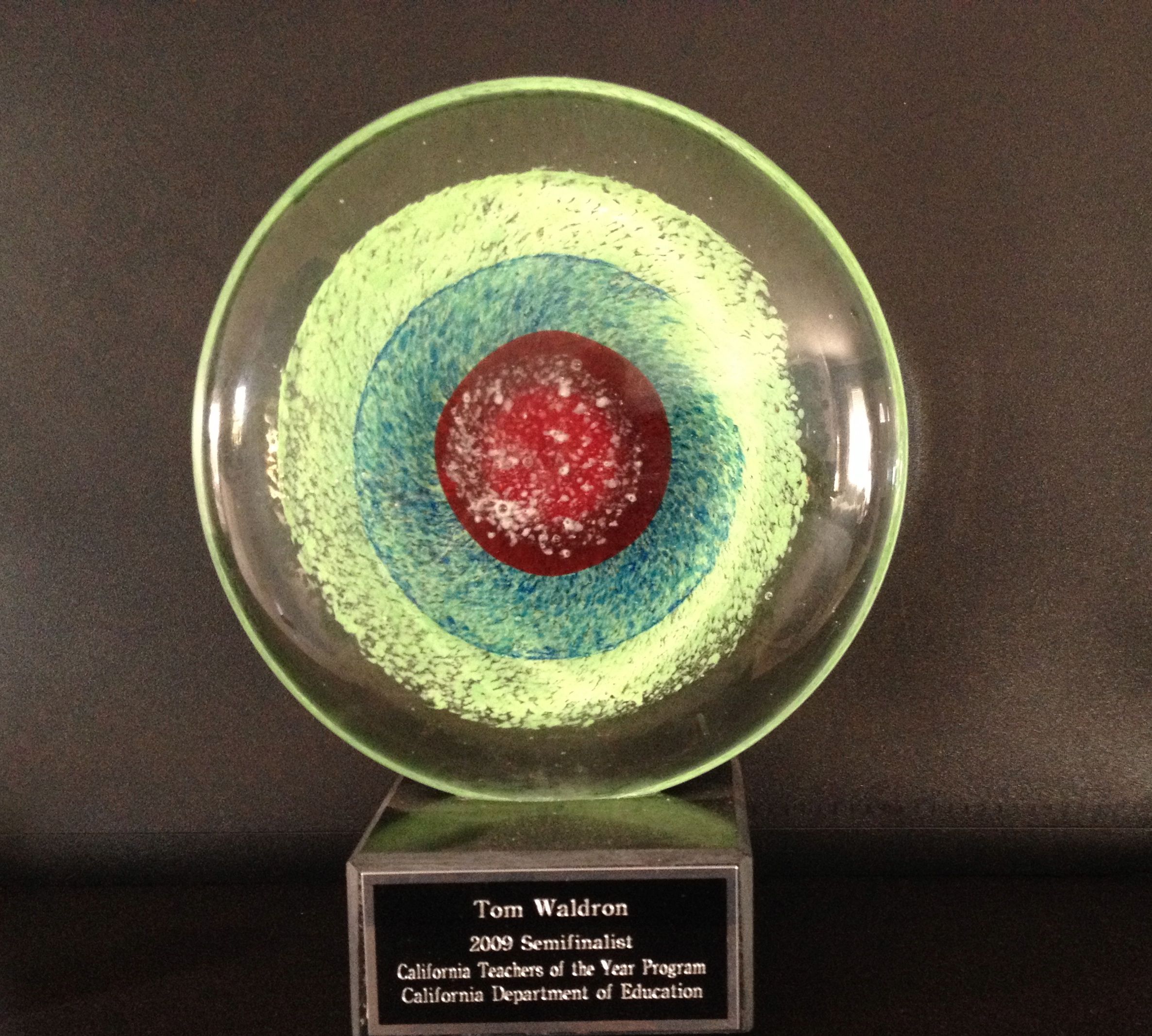
I had the good fortune of being chosen as one of five San Diego County Teachers of the Year in 2009. As a result, I made a number of appearances where I received numerous acrylic “awards” which I displayed for about a year and then boxed up. I never look at them, but can’t throw them away. Someday, one of my kids will. The one exception may be the most nominally significant one—an award recognizing me as one of 12 semi-finalists for California teacher of the year. It is a hideous acrylic creation that we dubbed the “menacing eyeball”. As I packed it away, I remarked dryly to my daughter, Emily that “you guys will be fighting over this someday.” For all I know, it will go the way of my parents’ ashtrays.

So, in the spirit of purging, I took on “the box.” For years, I have wrapped up and saved what I thought was a box that only contained the correspondence between my wife of 40 years and myself when we were interested/dating between the years of 1970 and 1974. Two weeks ago, I broke open two layers of plastic and dove into this archive. In addition to our correspondence, I found letters and cards from former students (one of whom had suffered an untimely death), letters from my high school classmates (one of whom had suffered an untimely death), my own high school memorabilia, and letters from former girlfriends and from Mary’s (my wife) friends, some of whom I dated while I was waiting around for her to notice me.

Some cards and letters were easy to discard, their authors being long forgotten, but others were much harder, a clear case of IEA. They told stories of connections with students who I had managed to support during traumatic times, cards from parents who had appreciated my efforts, one former student who I had helped out as a teen just to become her children’s teacher during the last year of my career. Throw them away? Logically, yes, I should. But no, they went into the “save” pile.

These earnest letters from parents and students make up more of my legacy from teaching than any award I might have received.   They make up a nearly 40-year history of working in a profession that I loved. When I look back at them, I like to think that they are representative of me being my best self. They remind me that teaching was so much more than a lesson well planned or another set of papers graded.

I will still open these cards and letters from time to time and enjoy those memories. I promise, I will throw one or more away every time and whittle away at the number that must some day face the shredder.

Next up! What I discovered in the mounds of letters that Mary and I exchanged during our long-distance romance. Ah, young love—It’s a beautiful thing!

Cool People Need Not Apply

Tom


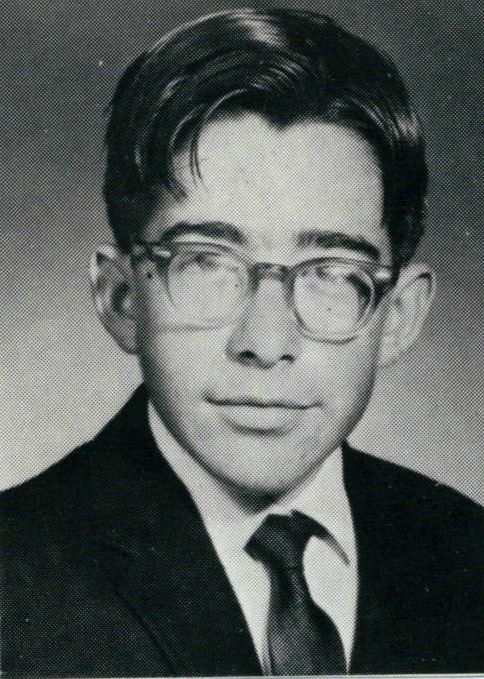
Yes, by posting my ninth-grade yearbook picture, a pic I usually keep under lock and key, I’m taking one for the team—the team of all of you who hate any pictures of yourself from high school. This is not a look I would wish on anyone, especially a young high-schooler hoping for some degree of acceptance and popularity.

I did not enter high school thinking of myself as a nerd, but I certainly had all the essential elements of what I now consider to be an outdated definition of nerd-ity. There was no tape on my glasses, and even I knew better than to use a pocket protector (after all, that’s why I kept a pencil box handy), but my social awkwardness, painful lack of self-assurance, and absence of athletic ability led me to focus on the only thing I was good at—academics. Clearly, in the strict stratification of high school society, I had “nerd” written all over me (see picture above).

I attended Saint Augustine High School, an all-boys Catholic school in San Diego, and sitting in freshman orientation, I felt incredibly alone because there were boys from all over the county, but very few from my small parochial school. I immediately latched on to the first person who was nice to me, Ralph, a friend I kept for exactly as long as it took me to make several new friends and to realize that (if possible) Ralph was actually even less cool than I was (Sorry Ralph, I still feel bad about that one).

I eventually escaped high school with some sense that I had outgrown the “nerd” label. By the end, I had a solid and varied friend group, was near the top of the class, had become co-editor of the school newspaper, and become active in drama (OK, I know, that one is a toss-up).

Also, one of the men I worked with at the grocery store where I had a part-time job took an interest in me and helped me improve my wardrobe (no small task during the early 70’s), feel more confident around women, and introduce me to the world of hair stylists which helped me to get beyond the slicked-down Vitalis look that I had cultivated as a ninth-grader. Best of all was a conversion to contact lenses my junior year, and my purchase of a 1968 metallic blue Mustang during my senior year, a car that remains the coolest vehicle I have ever owned.

While none of these improvements gained me entrance to the “cool kids club” on campus, I did leave high school with good memories, some very good friends, and a sense of confidence about the future.

Years later, as I began teaching, I felt a special kinship to kids who felt isolated or awkward and it was clear that the term “nerd” still carried a heavy stigma. But, something happened as the years went by. Just as in The Princess Bride when Inigo Montoya has to chide the evil Vizzini over his repeated use of the word “Inconceivable!”, respectfully pointing out, “You keep using that word. I do not think it means what you think it means,” the word “nerd” began to have a much more positive connotation.

This elevation of word in our language has precedent. In the 1300’s the word “nice” used to mean “simple,” or “ignorant.” To be “fond” meant to be “foolish.” Likewise words can decline and develop a more negative sense. Today’s “villain” (a la Voldemort, Moriarity, or Dick Cheney) simply meant “servant” long ago.

I’m not sure when the tide began to change, although it seems to me that it had something to do with, of all things, Harry Potter. There may have been precursors, of course, but this book series created such a cult among all ages that it unleashed midnight book releases, midnight movie showings, kids and adults showing up to both dressed in full costume—a total identification with the characters, the setting, and the story. There was something about the immersion in a pop culture phenomenon that allowed kids (and adults) to proclaim themselves as “Harry Potter nerds” with a sense of pride, not a sense of shame.

Toward the end of my career in the classroom, increasingly kids began to self-identify as “nerds,” sometimes with a grimace and a shrug, but more often with a laugh, often surrounded by a gaggle of other fellow nerds—happy, well-adjusted, athletic, and popular. After all, who wouldn’t want to be around people who are passionate, knowledgeable, and involved in either singular or multiple pursuits?

The title now seems much more associated with people who have a passionate dedication to something. While often, these passions are directed at icons of pop culture (i.e. Game of Thrones, Marvel Comic films, Star Trek, musicians) it also bleeds into much more mainstream pursuits. I mean, have you ever gotten stuck with someone who is desperate to explain to you just how well his/her fantasy football team is doing?

As a young person, being cool must be exhausting. There seems to be a slavish adherence to both a dress and behavioral code. One has to pretend to be friends with all the clan members while quietly forming strategic alliances and living with the notion that with just one slip, you can be voted off the island, cut off as someone who “used to be cool.”

I had to watch Cameron Crowe’s 2000 film, Almost Famous, at least 8 times before I started to notice how important it was for everyone to be considered cool. They were all trying so hard, and even the members of the fictitious band, Stillwater, were plagued by insecurity about how they were perceived, begging William (Patrick Fugit) the teenaged rock critic, “Just make us look cool, man.” Later William’s mentor, Lester Bangs (Phillip Seymour Hoffman) wisely counsels him, “The only true currency in this bankrupt world is what you share with someone else when you are uncool.”

It strikes me that being cool is just too much work. Give me nerd-dom any day. All one has to do is go out and buy a new action figure for her collection, stay at home on a nice day and watch “The Hunger Games” for the tenth time, don’t let a single summer go by without re-reading the Harry Potter books—all of them. Yes, it’s just fine to spend three valuable hours working out trades for your fantasy football team. Just please don’t bother me during the baseball season from 7AM to 8 AM while I’m having my coffee and carefully reading and analyzing the box scores from the night before. It’s important work. Someone has to do it.


“You F@#$%&* s Left Me Behind”—Abandoned in the Wilderness

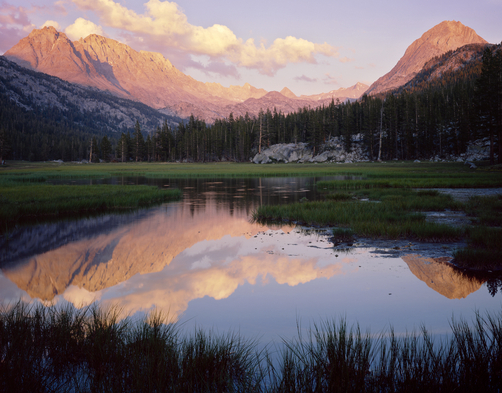
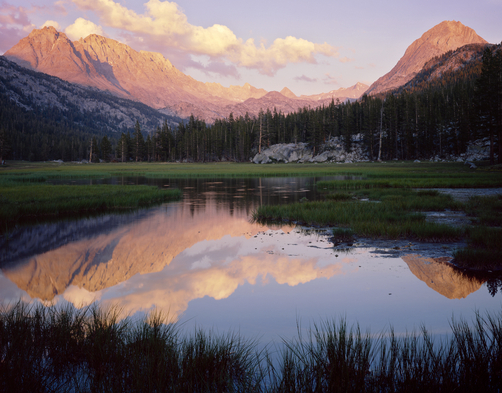
Mount Mendel, Mount Darwin and the Hermit, Evolution Valley, Kings Canyon National Park, Sierra Nevada, California


Note: Generally I avoid profanity in my posts, but some will show up in this piece in the interest of authentic dialogue.

As I mentioned in my last post, during my backpacking days, our group was dedicated to getting into Evolution Valley on the eastern side of the Sierras. The third time was the charm. Sort of.

It was Scott who spotted a shorter, but more difficult route to get there. It involved a relatively easy first day, a bruisingly difficult second day, and if all went well, we’d make the valley by lunch on the third day. But, once again, our well-rested enthusiasm while sitting around looking at maps in May overrode the reality of the trail we would face in August.

evol046


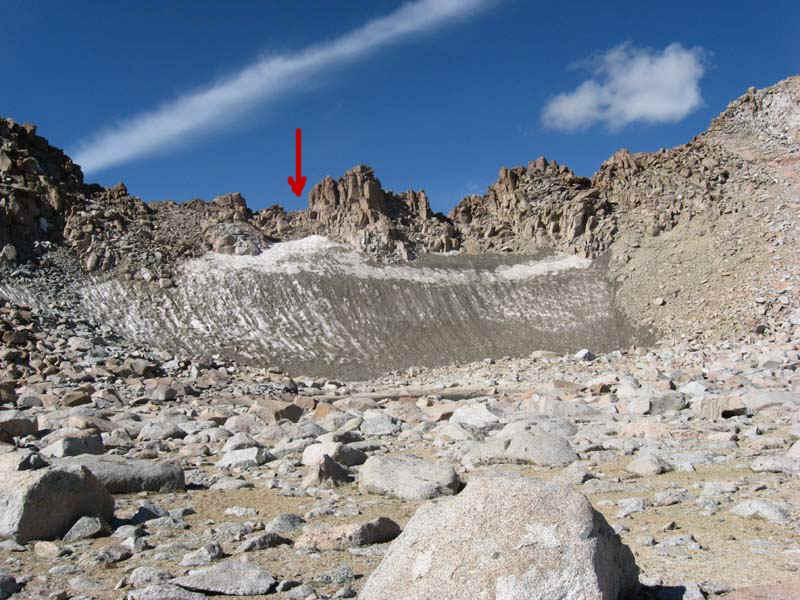
I was cursing Scott vigorously (in my mind) on that second day as I stood at the bottom of the steep incline that we knew from the beginning would be the backbreaker of the trip. We had spent the day threading our way to the base of the route that would ascend about one thousand feet over the course of a mile, a cross-country trail, meaning narrow and at times non-existent, with the last 500 feet being through a snow field. This would lead us over Lamarck Col (above), elevation 12,900 feet. A col is a small saddle or crossing that is not big enough to be considered a full-fledged pass.

There was nowhere to go but go up. It was one, slow, slog for me, and I had never been at this kind of elevation, had never made my body work this hard. The higher I got, the more it felt like my heart was going to burst alien-like from my body. I started to think of all of the good-byes I had not said to my loved ones before leaving on the trip.

As I hit the snow field, I didn’t think about anything except the headache and nausea I was feeling, my very first bout with altitude sickness. When I finally crested the top of the col, there was no elation. If possible, going down looked worse. The same one thousand feet, straight down, with no real trail, just a broken field of thigh-crushing boulders that I had to pick my way through and hope that every one I hit was solid and was not going to tip and launch me forward into oblivion.

We lunched at the bottom of this scree, knowing we had just gone through the worst part of the trip. There wasn’t much conversation, but Steve, generally acknowledged to be the smartest guy on the trip, said simply, “I’m not going over that again on the way out.” I think there was a collective sigh of relief that someone had had the brains to say what we all were thinking even if it meant a longer, more round about route back.

We camped that night near a chain of lakes in a spot known as Darwin Basin, feeling much better, knowing that tomorrow it would be all downhill where we would join up with the main trail that would take us to the friendly confines of Evolution Valley.

The four of us set off in good spirits the next day. We had studied the map and decided that our first stop would be where our current trail hit the main trail, having learned the lesson from my experience with getting lost to always plan for places to gather up after 1-2 hours of hiking to avoid losing track of anyone.

It should have worked. As usual, Harvey and Steve kept up a pretty brisk pace, and I settled comfortably back in the third spot with Scott taking his time and bringing up the rear. It was easy hiking and we soon were pretty spread out when I came to a fork in the road that had not been on the map. I looked for markers but there were none to be seen. Having looked at the map, I didn’t spend a lot of time agonizing over it. As long as I was headed downhill, I was going to intersect the main trail. The left fork looked more well worn so I opted to take it.

An hour later, I discovered I had chosen wisely. Steve and Harvey were resting comfortably at the trail junction, waiting for Scott and I. We figured Scott to be maybe 20 minutes back so we snacked and waited. And waited. And waited some more. We were puzzled, but not overly alarmed. Scott was experienced and the hike was easy, the trail, well marked.

But there was that fork in the road. After considering all of the possibilities, we decided that the most likely explanation was that Scott was the only one of us who had taken the right fork and had actually hit the main trail ahead of us and had likewise been waiting for us to show up, probably ½ mile closer to Evolution that we were.

We decided to forge ahead and see if we could catch up to him. The entrance to the valley was breathtaking. A wide stream ran down the center with steep ridges rising in the distance. By now it was late afternoon and Harvey, with his crazy, savant-like ability to sniff out a premier campsite suddenly veered off across the stream and found a nearly perfect spot—flat, protected, and possessed of a spectacular view.

We gratefully eased out of our packs and again considered the need to find our missing friend. Since I figured I owed him one, I volunteered to hike up the trail and see if he indeed had ended up ahead of us as we suspected.

Sure enough, less than a half-mile up the trail, on the opposite side of the stream Scott was comfortably set up in a campsite at least equal in beauty to the one I had just left. I called out a greeting, glad to be re-united with my friend, but he was anything but a “happy camper.”

“You fucking left me behind,” he said glaring at me.

“No way, Scott,” I tried to explain. “We waited for an hour. We could still be waiting and it wouldn’t have mattered. You came down to the trail ahead of us. If anything, you left us behind.”

But by now he had had a couple of hours to stew about this and had entered an alternative universe where logic had no place.

“You fuckers. I can’t believe you guys did this.”

I quit trying to convince him with logic and told him we were in a great site, less than twenty minutes back down the trail.

“No way. I like it here. I’m not moving.”

I saw there was no convincing him, so I told him I’d let the other guys know that I had found him and where he was set up and maybe we’d come up there and join him.

I shuttled back to Harvey and Steve, finding that they had begun to set up camp and while happy to know that Scott was safe had no interest in putting their packs back on and re-joining their disgruntled friend.

“Fuck him,” said Steve.

“Fuck him,” said Harvey.

I was torn, but tired of trying to be peacemaker.  “Fuck him if he can’t take a joke,” I said registering my vote.

So that night, in two campsites not twenty minutes apart, we separately enjoyed a peaceful evening, a gorgeous sunset, and a star-filled evening in what we had convinced ourselves was maybe one of the most beautiful spots on Earth.

After a leisurely morning, Harvey, Steve, and I packed up and headed up to Scott’s campsite. Scott, in better humor, renewed his list of the egregious wrongs we had done to him by abandoning him on the trail, but a night alone had completely changed his view of the event.

From that day forward, that night became “the best night of backpacking I have ever had.” He had savored the isolation, the quiet, living the experience of the valley without the distraction of his asshole friends.

To this very day, the story of this trip (if he is telling it) begins with “you fuckers left me behind” and ends with “best night ever.”


Wandering in the Wilderness (Without Wisdom)

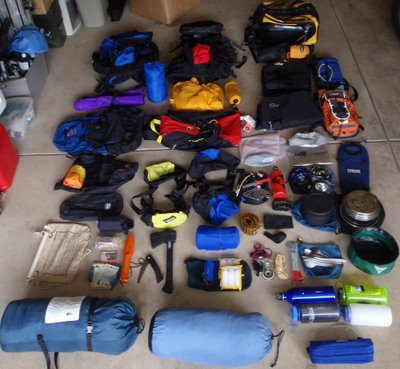
Camping-gear


I did not ever imagine over the 8 or 9 summers during the 1980’s when a small group of friends and I planned a yearly backpacking trip that I could possibly get lost.  After all, I was hiking with guys with a lot of experience.  Getting lost seemed the least of my worries.  Mosquitoes and having to eat freeze-dried food were much higher on the list of unpleasant realities.

This happened on the first of three attempts we made to get into and spend some time in Evolution Valley, one of the prettiest spots in the backcountry of the Eastern Sierra.  It probably remains so pristine because there is no quick way into it, at least not for guys like us who were not up to 10 mile, full-day hikes and 10-day trips.  But when planning the trip in May we were always much faster and more ambitious than once we strapped on the 50-pound packs in August.

Mount Mendel, Mount Darwin and the Hermit, Evolution Valley, Kings Canyon National Park, Sierra Nevada, California


I officially became trail-stupid on the second day of the trip. We reached a stream that did not have an obvious safe crossing spot and had to stop and scout both up and down stream to find a suitable place. We finally found one upstream, crossed, and then stopped to pull out our rain gear as it began to drizzle steadily. I was a bit slower getting geared up, and Scott and Jan started back downstream to pick up the trail. I assured them I’d catch up in a minute.

I was probably two or three minutes back when I also headed downstream. Somehow, though, as I angled cross-country away from the stream, I missed the trail. Even though we were in fairly flat terrain there were enough hillocks to block my view of the other guys and in the open like that, they could not hear a thing when I called out.

I alternately decided that I was above or below the trail and then would adjust my direction, certain the trail must be just over the next rise. I would stay the course for 10-15 minutes at a time before I’d be forced to stop, survey the landscape and try to figure out “if I was the trail, where would I be?”

Like a man refusing to stop and ask for directions, I would decide on a new angle and plunge off once again, sure that I was just minutes away from the security of the trail. Even as I did it, I knew I was making a fundamental mistake. I refused the one sure way to get back on track, which was to go directly back to the stream and slowly hike up and down the shore until I saw the trail, the smart and sure thing to do. No, it was going to be just over that next hill. Keep moving forward.

As my misdirections continued, panic began to creep in. I mentally checked for how many of the “10 Essentials” of backpacking I had (things like firestarter, emergency blanket, food, etc.) and figured I was at about 50%. Part of backpacking as a group was to split up all of the “common” gear so I had the tent poles, but no tent. I had food, but Jan had the stove, and Scott had the cooking kit. As the hour got later, and the rain continued to fall, I began to think that maybe, just maybe, I would be spending a very cold, wet night exposed and on my own.

And then, as I was staring at my misguided path, I saw hoof prints. On previous trips we had seen, and often cursed, campers being packed in on horses, with guides, good food, and cold beer. We celebrated our manly misery and ruggedness as they passed us while secretly harboring intense jealousy that we hadn’t thought far enough ahead to book one of these trips ourselves.

I knew that these guided trips might go off-trail for a bit, but that they would always return to the trail for greater ease of riding. The path of hoof marks was easy to follow and when it suddenly veered to my right, I looked up and there, like a broad pencil mark traversing the rolling landscape, was my trail.

I had officially been lost for maybe an hour, but it had felt much longer. It was getting into late afternoon, and the steady drizzle had not let up. I knew the guys had probably found a campsite by now, and all I had to do was to keep plodding toward it.

It was funny how once the crisis was over, I quickly forgot about all of the dire circumstances that I had begun to imagine for myself, and the anger at myself for being so foolish and instead became fiercely focused on the keen skills of observation that I had shown and the clever deductions that had saved me.

I owe my friend Scott for many things. He brought me back to the wilderness, taught me so much about backpacking and about how to laugh at myself. We taught at the same high school for over twenty years and then played as hard as we worked. But my most enduring memory will be of that day, as I trudged along, tired and damp and weary. I looked ahead and there he was in his blue rain jacket, smoking a cigarette, and scanning the trail for me. He and Jan had set up camp and soon realized that something had happened to delay me. Scott volunteered to walk back up the trail, tuck himself under a tree, and wait. I was enormously happy to see him.

So as we ate and I told the story on that soggy night, we realized that we had collectively learned an important lesson. We now realized that we must always establish fixed stopping points where, knowing we would get stretched out on the trail because we all walked at different paces, we would meet up and carry on. We’d never again make the mistake of possibly leaving someone behind.

But what I quietly learned was a lesson in self-reliance. I had screwed up. I had fought through the panic. And, most importantly, I had figured it out and gotten back to camp safely.

But I had also learned that I was never truly out there on my own. If I had not been able to find my way, Scott would have been there to find me.

Next up! Scott Gets Abandoned—Or Thinks He Does!


Texting: Proceed With Caution

Text-Fails-11


When I taught a short story elective, I loved using Dorothy Parker’s wickedly satirical story “A Telephone Call.”  It’s a wonderful example of the use of internal monologue as a (more than) slightly obsessed young woman literally waits by the phone, expecting a call from a young man that she is apparently dating.  Published around 1930, I had to build some context for the students.  Yes, phones used to have dials. Yes, women used to wait for men to call first.  At the time, it was considered forward and inappropriate for a woman to be perceived as the aggressor—to take the initiative in a relationship.  They honestly looked at me as if I had somehow slipped into a foreign language.

The young woman in the story dramatically ponders every encounter she has had with the man and every word he has said to her previously as she tries to convince herself that the man’s tardy phone call is no reason for alarm:

This is the last time I’ll look at the clock. I will not look at it again. It’s ten minutes past seven. He said he would telephone at five o’clock. “I’ll call you at five, darling.” I think that’s where he said “darling.” I’m almost sure he said it there. I know he called me “darling” twice, and the other time was when he said good-by. “Good-by, darling.” He was busy, and he can’t say much in the office, but he called me “darling” twice.

Upon finishing the reading, the class was quick to claim that she was simply crazy, obsessed, ridiculous.

“Wait a minute,” I said. “Do you mean to tell me that you’ve never gotten a note, or a message, or a text and spent considerable time reading and re-reading it, trying to guess at exactly what the person’s intent and tone was?”

“Ooooh, yeah,” they laughed.  Virtually all of them had stories of messages about which they had obsessed–the more important the person, the greater the examination and analysis.

I am not immune from this. However, my first experience was when my bride-to-be and I dated long distance for two years during the early 1970’s.  We depended on the U.S. mail almost exclusively, writing each other two or three letters a week.  For me, each trip to the mailbox was full of sweet anticipation.  How would she have responded to my most recent verbal advances?  Would there be some vague promise of greater intimacy that would keep me entirely on edge until I could see her over the weekend?  Exactly how would she sign it?  Was “thinking of you” better than “love you” or a generic “see you this weekend” or the ambiguous “luv ya!” ( I mean, really, what does that mean?).

I saved most of these letters and occasionally I’ll grab one, in part to examine the artifact of the 7¢ stamp, but more to enjoy suddenly being cast back 40 years into my past, swept up by the youthful enthusiasm of a first love, feeling caressed by the warm words of affection that have lost none of their impact over the years.

I don’t bemoan the advances in technology or long for the time when one had to wait days for a loved one to receive a letter or to get a response, but I have discovered great dangers in the instantaneosity (I just made up that word) of our communication.

Lots of people struggle with this transition.  I remember when phone message machines first gained popularity and almost every message I got began with “Oh, gosh, I just hate talking to these machines!”  At least for me, that changed pretty quickly to feeling disturbed and a little betrayed when a person actually answered his phone when all I wanted to do was to leave a quick message and wasn’t mentally prepared for all the social niceties that go along with an entire phone call.

Texting has taken this dynamic to a whole new level.  In talking with my former students, especially those involved in some kind of romantic relationship, texting seems to be the primary means of communication, possibly exceeding face-to-face conversation.  When they have described their day or even week-long texted “conversations” to me, I become convinced that they have thrust themselves into starring roles in a Dorothy Parker short story.

I get a lot of questions from former students, mostly young women who are now friends, particularly if relationships come up as an issue.  If they are in the midst of some intense texting with their intended, I get asked to help interpret–“after all, you used to be a guy.”  Yes, once, long ago.

“I mean, what does it mean when he says he loves me, but he needs some time, some space?  (“Means he’s dumping you”) “ How can he say he loves me and then just treat me like crap!” (He’s cheating on you) “But he texted me at 2 AM and it really sounds like he means it this time.” (No, it means the bars just closed, he’s drunk, and feeling nostalgic, not romantic).  “How long should I wait before I respond?”  (“For. Ever.”)

 In truth, I never say any of the things above that are in parenthesis.  In truth, I have no idea how they should respond and what they should do.  Mostly I just listen and try to figure out what they are hoping that I will say, and reassure them that yes, eventually, everything will be just fine.

Texting has been problematic for me also.  I have found that sarcasm does not translate well in texting, so I have had to resort to an occasional 🙂 to let the person know I’m teasing and not savaging them with some off-hand remark.  However, most emoticons are a mystery to me and I don’t use them because they seem silly and confusing.

But the greatest danger I have found in texting is not in being misunderstood.  After all, you can always go the extra mile and actually talk to the person. No, far more dangerous is texting under the influence.  Because, let’s face it, we often use words to shield ourselves from the raw emotions we might feel in the moment.  Take away that filter, that safeguard, with two or five beers, and anything might happen.

Recently, I flew from San Diego to Phoenix to see the great James Taylor in concert, a concert I had been waiting to see for 40 years.  Lucking into ninth-row seats and getting close enough at intermission to have him autograph my ticket, left me walking back to the hotel full of the afterglow of a night I had waited for for a very long time.  I was exhausted, but just didn’t want the night to end.  Have you ever felt that way?

I ducked into the hotel bar around midnight, hoping to slip in before last call.  Well, it turns out that “last call” was a pretty flexible concept to the bartender, and I was content to have a beer, watch basketball highlights, and eavesdrop on a blonde sitting nearby who was spewing profane and angry invective about her ex-husband and life in general to an anxious looking guy who I think was listening patiently and hoping to get lucky.

Pretty soon, those two cleared out (the guy never actually had a chance it turned out), and it was just me and Brian, the bartender.  One beer turned into three and then after a bit, my glass just kept getting refilled without me even asking.  I figured out later that once Brian and I had hit it off, he simply wanted someone to talk to while he got the bar closed up sometime around 2 AM.

I suppose that it’s not universally true, but it seems that anytime after 2 AM, alone in a hotel room, is about the loneliest place I have ever found myself.  I would be home in less that 12 hours, slightly hung over, but surrounded again by all things familiar, but somehow the need to reach out and make contact with a friend right then and share something about the wonderful concert, the too-long stay at the bar, my guilt over realizing that I should know better, seemed overwhelming.  I composed a text about the night that I had just spent but feared sending it to anyone.  My sister in Maui and my wife in San Diego were sound asleep, and I knew I could not disturb either of them.  In the end, I picked on a friend, a teacher in New York City, someone who I convinced myself just might be awake, someone who I knew would forgive an ill-timed text.  I was surprised to get a quick response, somewhat garbled although she claimed to be awake already, reassuring me that if I drank some water, took some Advil, and went to bed, I’d be just fine in the morning. She was right of course, and I did just that.  Eight hours later sitting at the airport, I wrote her a much more sober apology text, an I’m-such-an-idiot text, which she laughed off forgivingly.

Texting, like every use of language, is imprecise and subject to misinterpretation.  It can create confusion, anxiety, heartache and is the worst tool to be used for a break up since the post-it (“I’m sorry, I can’t, Don’t hate me”).  However it is an extraordinary advancement in aiding the most human of needs—the need to stay connected; to reach out to a friend on a lonely night; to share a picture with your son; to make your daughter laugh; to remind your wife that you haven’t forgotten the days of the 7¢ stamp.


Grieving in Teaspoons

momdad

When it comes to grief, I often feel there is something I am missing.

I watch my friends and relatives deal with the loss of a loved one and often they are drenched in sorrow, tears, depression, and anger. I just passed the sixth anniversary of the death of my dad, and I have lost some friends and colleagues about whom I cared deeply. In fact, as I enter my 60’s, I find myself attending too many funerals as social events. However, in watching the grieving of others, I have been surprised (so far) by my own sense of detachment, as if I’m failing at grief.

My dad, Jack, was a wonderful man. He gifted me with his sense of humor, an indispensible tool in my experience as a teacher, and he lived his 86 years with a sort of joyful kindness and a true affection for others, especially his grandchildren. When we gathered for his funeral, the same comments came up over and over. No one could remember ever seeing him angry. No one could remember him uttering an unkind word toward another person.

As a child, he came to know the things I cared about and made sure I got to experience them. He was never a sports guy, but he could see my interest grow. So he made sure I got to see the Dodgers in Chavez Ravine (unfortunately a guy named Joe Moeller was pitching that day instead of the great Don Drysdale or even greater Sandy Koufax). We made regular trips to Westgate Park where the minor league Padres played their games. We experienced hockey, professional basketball, and the Harlem Globetrotters together. When Bill Cosby broke on the scene, and I began to memorize his comedy routines and perform them at Scouting events, he surprised me with tickets to see him live on stage. I am positive he would never have spent that money on himself just for his own enjoyment.

My dad’s last three years were difficult ones. He became increasingly crippled by arthritis and was in constant pain. Dementia began creeping in. He kept punctuating conversations with phrases like, “I bet you never thought you’d see your old dad all crippled up like this” as I’d help him into the car on the way to endless doctor appointments. More and more often, even at holiday gatherings, he began to express his desire for his life to be done with. Hearing every one of those woeful comments was a moment of grief for me.

He passed away in the hospital, sneaking away suddenly and quietly. He woke up in the morning, began teasing the nurses and talked one of the pretty ones into helping him with his morning coffee. He got on the phone to my mom to find out when she was coming in to see him and took time to tell her once again how much he loved her. And then, when no one was looking, he died. It was May 2, 2008.

I expected to have a wrenching, emotional response even though he had been through three years of suffering, and we had had numerous close calls during that time. Instead, I found myself consumed with the details of his funeral, keeping an eye on my mother and my children, and in writing a eulogy that would give him all the credit he deserved.

That emotional response never came for me, not entirely. My good friend Stephen noticed it and told me, “You can’t just be the tough guy through all of this. You have to allow yourself time to feel it.” But it just wasn’t there. Not then.

The first time it hit me was in June. I was on a walk through the neighborhood and mentally working on a “to do” list, and it hit me that it was almost Father’s Day and that I needed to be sure to get by the store and pick up a card for……oh, yeah. I didn’t need to do that. I would never need to buy a Father’s Day card again. Suddenly, his loss began to feel real.

In September, I was chosen as one of five San Diego County Teachers of the Year, a truly memorable recognition, at a televised, gala event at the Balboa Theater in San Diego. In accepting the award, my thoughts went right to him and how proud he would have been to see me receive that award. He was never the kind of father that I had to work to impress or please, but someone who always gave me the confidence that came with knowing that my father believed that I had already exceeded every expectation that he could ever have for me. I missed him there, on that stage that night.

One of the most trivial, but most painful moments came when I grew tired of seeing “Mom and Dad” on my cell phone every time I had to call my mom. It was inaccurate. Dad was gone. Dad was not going to answer.   I needed to delete my father. Every press that removed the “and Dad” felt like a rejection and a betrayal.

Even today, I will catch myself thinking of an odd encounter or a pleasant moment and how I need to get on the phone and call my dad and tell him the story. And then I catch myself in mid-thought and lose him once again.

I began to realize, early in the process of writing this, that not only does everyone grieve differently, but that my reactions to grief are packaged all around the history and circumstances of the loss. There are potential losses that I refuse to even think about much less write about. I can’t begin to imagine how crushing they might be.

For now, in my way, I still grieve for my dad. This grief continues to be doled out to me in teaspoons, painful ones. Perhaps the next one will be a tidal wave.

dadmarkerII


“I Am The Eggman”

Image

When asked what led me into teaching high-school English as a career, I have several ready answers–I wanted to dedicate myself to helping young people; I loved reading and writing and was happy that I could make a career out of it; I liked the idea of having summers off—the usual.  And while all of those things were true, I always left out one key factor because I didn’t want to admit it.  I wanted to go back to high school.  I wanted to go back to high school to see if I could achieve a level of “coolness” that had always eluded me as a student.  I’m not proud of it, but there it is.

There were two teachers that most influenced my thinking about this because they provided models for how someone could be well liked and also be a powerful teacher.

Vic Player, geography teacher at Saint Augustine High School, was a man with a bold and playful sense of humor.  I was a painfully shy freshman who just wanted hide behind a large person in class and go unnoticed.  As he was taking roll one day early in the semester, he called out “Waldron?  Waldron?  You mean like walrus?  You are the eggman, you are the walrus?”  I sat in silent horror as I raised my hand to acknowledge my presence and my new connection to the popular Beatles’ song of the time.  “Yeah, Waldron,” he said smiling, “from now on, you are the Eggman.”

And from then on, I was the Eggman.  All of a sudden, I had an identity in the class.  I was someone, and I could no longer hide, no longer wanted to hide.  This man, with one silly nickname, transformed my first year experience in high school by giving me an identity that I could never have carved out for myself.  He refused to call me by any other name from that point on, and I marveled as I watched his easy confidence in the classroom, how he teased, and taught, and cajoled, and nurtured his ninth grade class.  He was by far, the coolest person in the room.  I wanted to be like that.

Three years later I faced the terrors inflicted by John Bowman, my senior English teacher.  The year before I had been in a class next door to his, and we frequently heard pounding, yelling, and then laughter coming from the class.  We were terrified.  All we could imagine was that someone in his class had said something stupid and had been thrown up against the wall, maybe pinned to a cork-board like an impaled butterfly, to be ridiculed by the entire class.  We entered his room, already cowed by the legend and his fierce reputation, the knowledge that he did not suffer fools, and that he did not spare criticism.

To our relief, we quickly discovered that the pounding came from Mr. Bowman slamming his hand on his desk for emphasis, as frequently in praise for a good comment as in disgust for one that didn’t please him.  Our written work was treated with contempt for most of the first quarter, but we quickly learned how to write and how to please the great man.  There was no better day, no greater compliment, than the moment when he called on me and I ventured an answer to a question and he slammed his hand on his desk with satisfaction.  “Mr. Waldron!” he shouted. “Say that again!”

It took most of the year to figure out how much he loved his class.  We knew he loved literature.  His passion swept us away—Sophocles, Shakespeare, Thoreau, Hemingway—all of them were heroes, giants.  However, he was a consummate actor and hid his affection for us as long as he could.  By the end of the year, when he handed out his own home-made awards for excellence, we were allies with him in his secret.   The incoming juniors would never know.  But I knew.  And I wanted to be like that.

As it turned out, I could never “be” either one of those two exemplary teachers.  However, I learned some of my key values from them—passion, humor, a dedication to excellence, and a commitment to making every student feel included, honored, respected.

If students remember anything from my classroom it will be the fact that for the last 15 years or so, I greeted every student, every day, with a handshake.  It provided a short, personal moment of acknowledgement for every one of my kids.  It became so ingrained as a classroom ritual that if I forgot and started class without having made the rounds, students would cry out in protest. One student described it this way in an end-of-the-year note to me: “Taking those few minutes out of your day to talk to each student, really made a difference especially during a time where every teenager is struggling to figure out who they are and where they fit in.  It was nice to know that at least one teacher cared enough to take those few seconds out of their day to treat each student like a real person, not just another face in the crowd.”

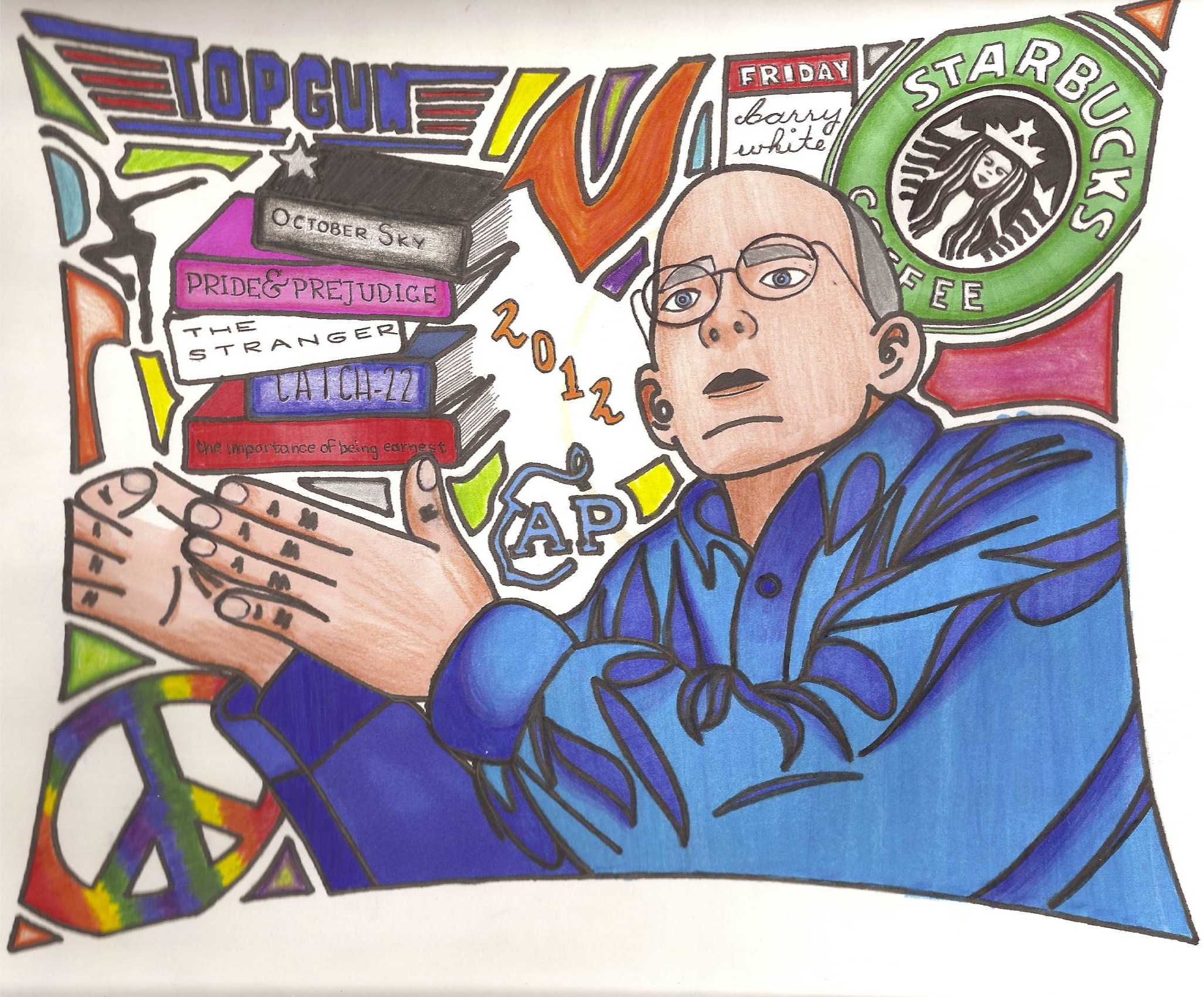
So, did my 36 year-high-school do-over achieve its purpose of giving me a status I couldn’t quite grasp the first time around?  Not exactly.  While I gained a certain amount of notoriety for my classroom traditions such as the handshake, loud music to begin each day, Barry White Fridays, movie nights, and the year-end scrapbook, I pretty quickly realized that I was there to make my kids feel special as they tried to survive high school; to make them feel accepted, and cool, and as if they were in a place where they belonged.  It was when I had a really good day in helping a student, that the Eggman felt cool once again.


Thank You, Paul McCartney

Baby, I’m a man, maybe I’m a lonely man

Who’s in the middle of something

That he doesn’t really understand…

I have to admit, despite my eventual qualms about all things Catholic, it was a good decision for me to attend Saint Augustine High School, an all boy’s Catholic school in San Diego.  All freshman had to endure a period of hazing, which included wearing a beanie with the purple and gold school colors for the first six weeks, and being taunted and ordered about by upper classmen, but it was tolerable, and a part of a fierce sense of school spirit, loyalty, and tradition.  The entire school could fit inside the gym.  We did so every Friday during football season, and I can still feel the sense of anticipation as we waited for the band to begin blaring out “When the Saints Go Marching In” as the football team marched in and began a loud and raucous pep rally.  I had excellent teachers for the most part and was proud to be a Saintsman.

Meeting girls, though, was a different story.  Our school took turns hosting dances with the local Catholic girls’ schools, but I found them uncomfortable and awkward, full of a multitude of opportunities for rejection and only slim hopes for satisfaction.  I did managed to go on a couple of dates in my first two years, mostly with girls who were as scared and awkward as I was, but still found them to be mysterious and confusing.

Then one day, I hit the jackpot.  My friend, Pat, a drama kid, came to me and begged me to join the musical production of “The King and I” at Rosary High School, the nearby girls’ school.  “You don’t have to be able to act OR sing,” he reassured me, “they just need guys.  Anyone can do it.”

So, I joined the production for the simple reason that I knew that the girls would vastly outnumber the boys, and I still had hopes as a junior that I could salvage at least some valuable and maybe even memorable social experience before I graduated.

It was my first exposure to drama and in my 16-year-old-eyes, we slowly mounted a magnificent production on the tiny high school stage. The only musical accompaniment was a single piano played by the enthusiastic and dictatorial nun who was also the play’s director.  I had seven different parts in the play, all of them non-speaking.  Nightly, I had to smear my body with a base make-up to make my pasty skin look bronzed and I spent every performance racing from costume change to costume change, just trying to be in the right place in the right time.

Having never been in a drama production of this magnitude or of any magnitude, I was a little overwhelmed by the emotion of closing night.  Even before the final curtain call, there was a tremendous amount of hugging and kissing going on and I was intent on being involved in as much of it as I could be.  In the midst of this vortex of emotion, one of my friends nudged me over towards Dolores, a lithe, beautiful Pilipino girl who seemed intent on passionately kissing every boy she could get her hands on.

I should mention here that I did not then, and even sometimes do not now, have a clear understanding of the appeal of French kissing.  My only introduction up to that point had been my older sister and her boyfriend showing off in front of my younger sister and I who both agreed the behavior was completely disgusting.  My older sister sneered at us.  “You’re too young to understand,” she sniffed.  Whatever.

But when suddenly I found myself in Dolores’s arms, she was kissing me with her mouth wide open, something that immediately made me feel I had become connected to a lovely but out of control vacuum cleaner.  She seemed to be waiting for me to do something, but I had no idea what it was.  I was just sure I wanted to kiss this way as long as she would let me, hoping maybe I would figure it out.  We broke the kiss and I stumbled away with a sense of wonder, loss, and determination.  I had to have a second chance.

The chance came a week later.  My school had a junior-senior prom coming up and so I had been casting about in my mind for who to ask.  After that night, my sights were set firmly on Dolores.  She had no good reason to go with me except that we knew each other from the play and as a sophomore girl she had never been to a prom.  It was just enough for her to say yes.

Proms are supposed to be about flowers, tuxedos, music and pictures, but in my mind, the dinner, the dance, and the after-prom were simply 10 hours of foreplay leading up for a chance to kiss her goodnight. Through the first part of the evening, she was a delightful date.  I still remember the aqua-colored dress and her long, lustrous hair done up beautifully to frame her delicate face. I, at times, could not believe that I was there with a date as lovely as she.

Things took a turn for the worse at the after-prom.  Suddenly Dolores disappeared and from the reports I was getting from my friends, she was chasing after Rocky, our star wrestler, a friend of mine, while I sat disconsolately by a pool table in the bowling alley.  After a miserable hour or so, she re-appeared, looking bored, and finally, it was time to take her home.

I walked her up to her front porch feeling a little sulky.  After all, she had bruised up my ego pretty well.  Of course, I had asked her for the shallowest of reasons but still, was one night of pretend loyalty too much to ask?  My feelings weren’t hurt so badly that I didn’t feel a rush of anticipation as we approached her front door.  She turned and smiled and thanked me, and the smile was enough to melt any resentment I had felt as she drew me toward her and once again kissed me deeply and passionately and for the last time.  Somehow during that kiss, that I hoped would last forever, she taught me what I was supposed to do.

I drove home in a daze and I can still hear Paul McCartney singing, “Maybe I’m Amazed” on the radio, which seemed perfect at that moment.  The sun was coming up, and I was immersed in the wonder and mystery of love and lust, hope and loss.  I had a feeling the world had just grown for me a little bit.

Thanks, Paul, for crystallizing that experience for me, freezing the moment in a way that only a song can do.

Baby, I’m a man,

And maybe you’re the only woman who could ever help me.

Baby, won’t you help me to understand?