The Answer Is…I Have No Idea

In a comment I posted recently, I mentioned that I had met my wife when we were both juniors in high school and that we later (in 1974) were married and continue to torture each other to this very day as we approach our 42nd anniversary.

One of our writers asked what was the “secret” to having stayed together for so long, and I hope I can give a reasonable response. It won’t be complete or in some cases helpful. Sometimes I think, when it comes to relationships, there is an awful lot of luck involved.

We were celebrating year number 36 at a swank hotel in Coronado, eating appetizers and having an afternoon cocktail, when Mary asked me, “Did you ever think we would still be married after 36 years?” In one of my shining moments as a partner, without preparation or pretense, I honestly answered, “It never occurred to me that we wouldn’t still be married after 36 years.”

So there is something about commitment and expectation that makes a big difference, I suspect. I wrote earlier about how Mary and I first met at a youth retreat and my first impressions of her were that she was strong-willed and looked terrific in the jeans and snug t-shirt she was wearing. For me, it was a powerful combination. I did have to wait around a bit, dating friends of hers, until she ditched a tenuous boyfriend, and I could swoop in. Yeah, I was the rebound guy.

But for all intents and purposes from age 18 to age 21 when we got married, we were each other’s everything. She was extremely faithful, and I never found the wild oats that I guess I was supposed to sow. One time, I put our romance on hold for about two weeks to give me space to consider if I might have a vocation to the priesthood (I’m a recovering Catholic), but I happily realized that giving up my affection for women was not an acceptable compromise and our relationship intensified quickly.

So, right. Longevity. I might be completely off on this, but I think the sexual freedom that young people have enjoyed over the past few of decades (we just missed that particular wave) has made them a little uncertain about the viability of a long-term commitment. The number of serious partners that young people now have between the ages of 20 and 40 seems to make them feel unsure about the possibility of a union that will last a lifetime.

Believe me. I’d love to have a wonderful, guilt-free affair. Truth is though, I can’t even be unfaithful in my dreams. No, I’m serious. I have turned down the advances of beautiful women in my dreams and hated myself for it in the morning. I am a terrible liar, and I find myself feeling guilty about things that I have only thought about doing.

It has not been easy. We pretty much lost ourselves in the 25 years we dedicated to child rearing. Our children continue to mean everything to us and continue to challenge us. It turns out that being the parents of young adults is just as tough as dealing with the terrible twos.

Both of us worked in demanding jobs that we loved. I cared deeply about becoming the kind of teacher that could, on a good day, change lives. As hard as I worked, Mary worked harder. She spent incredibly long hours as a teacher, principal, and district administrator. Her workdays seemed to have no end. All of that took a toll on us as a couple. And while we certainly went through periods of time where we felt more like roommates than lovers, we persevered, believing that eventually the bond we had initially enjoyed would return.

In retirement, we are now healing. We’ve identified some of the dynamics that have continually driven us apart and are now much more aware of each other, appreciative of each other, loving toward each other. We still have work to do, but now we feel like we have the space and time to make things special again. It doesn’t hurt that she still looks great in jeans and a tight t-shirt (yes, I really am that shallow).

I do believe that relationships can last. I’m not sure I’ve done the subject justice. Maybe our combined stories will weave the tapestry that creates an answer that satisfies.
 

A Pain In The Neck

ChronicPainMind

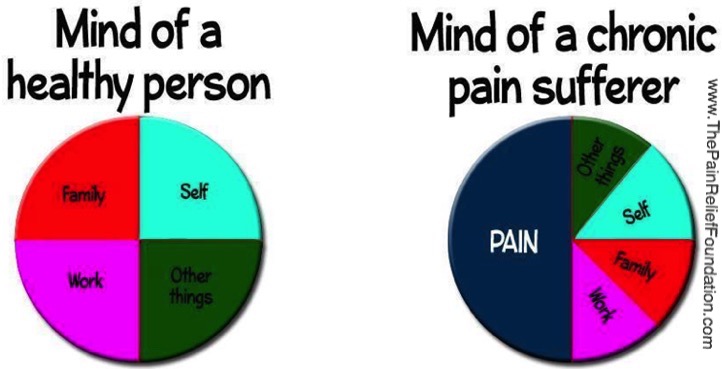
At age 63, I’m blessed with pretty good health. I won’t be training for a marathon anytime soon, but I’ve managed to dodge the scariest and most hideous forms of progressive diseases that give me nightmares.

However, I have had the same headache for 10 years now. It began as a dull throb at the base of my skull and now involves all of the muscles of my upper back, particularly extending along my right shoulder and down my right shoulder blade. I initially blamed the headache entirely on my problems with TMJ, but now realize that 50 years of poor posture have probably contributed equally.

On a good day, three ibuprophen will take the edge off and get me through most of the day. Some mornings though, I wake up feeling like someone has jammed a knitting needle down my neck and into my upper back.

The pain has successfully resisted $5000 in TMJ treatments, acupuncture, chiropractic, physical therapy, injections, massage, yoga, heating pads, topical creams, and a myriad of stretches and exercises that I’ve been told would help if I would do them daily, hourly, whatever.

All of these things have provided some temporary relief. If I could afford a daily massage, I think I would be pain free. Visits to my chiropractor also are particularly helpful; but then even if she could “fix” me, I’d continue to make up excuses to go in and see her because we’ve become friends and she is amazingly pretty.

So I manage the pain by using all of the above along with as few ibuprophen or Tylenol as I can get away with. I’ve read their warning labels and I know there is an almost inevitable downside to their constant use, but chronic pain is a bitch that I simply can’t tolerate day in and day out.

I recently discovered what seemed to be a lovely cure-all as a result of my adventure with sinus surgery. I was given something called Norco, a pain medication that combines Tylenol with just 5 little milligrams of Hydrocodone, a cousin of Vicodin. Having had little experience with opioids, I thoroughly enjoyed the 4 or 5 days that I felt justified in using this wonderful drug. I found that it didn’t necessarily eliminate pain entirely, but it took care of most of it and made me feel so good that I didn’t care about any pain that was left over. I was ready to try to find a friendly doctor that might keep me on the stuff until I read all the side affects. Just like all good things in life, it’s both highly addictive and likely to kill my liver or kidneys or both. Worst of all, to keep taking it I’d have to give up my affection for craft beer, an unacceptable trade-off. However, I still have 19 pills left—just enough for an occasional vacation from the pain if I feel I need it.

So that’s it. Big surprise! I’m getting older, and I wake up with aches and pains. I know how lucky I am that this is the extent of my physical troubles for now. I sure hope it stays that way.


The Dead Dads Club

momdad

CRISTINA: “There’s a club. The Dead Dads Club. And you can’t be in it until you’re in it. You can try to understand, you can sympathize. But until you feel that loss… My dad died when I was nine. George, I’m really sorry you had to join the club.”

GEORGE: “I… I don’t know how to exist in a world where my dad doesn’t.”


CRISTINA: “Yeah, that never really changes.”

The passage is from an episode of Grey’s Anatomy where the character, Cristina Yang, is giving her blunt comfort to a colleague who has just lost his father.

I was reminded once again of my membership in this club last night. I was attending a workshop and the session was devoted to reflecting on our “childhood attachment relationships.” The questions on the worksheet asked us to think about from whom we received comfort and support as children, how we had come to define that love and support, had we ever felt unsafe, betrayed, etc.

I was a little stuck at the beginning, my memories of childhood being fuzzy at best, but the more I spent time with it, the more I came back to my father as having been my primary source of warmth, trust, and stability. I’ve written about him before here, but what brought me back to him, besides the workshop, is the increasing number of friends and relatives who seem to have suddenly become members of the club.

It’s one of the things that truly sucks about aging is the increasing number of funerals one must attend to support young friends who have lost their loved ones or for contemporaries who have succumbed to the vagaries of time and age. And every funeral is joyful, or tearful, or awful, and all of them leave me feeling guilty about my happiness over continuing to wake up every morning. Every one of them is a reminder that I will be the featured guest some day.

But sitting in the workshop, thinking about my dad who I lost in 2008, I felt sad that I don’t think he ever knew that he was my chief source of “comfort and connection” the entire time I was growing up. As good as our relationship was, neither of us was very good at articulating our love and affection for each other. It just wasn’t a Waldron thing to do.

dadasleep

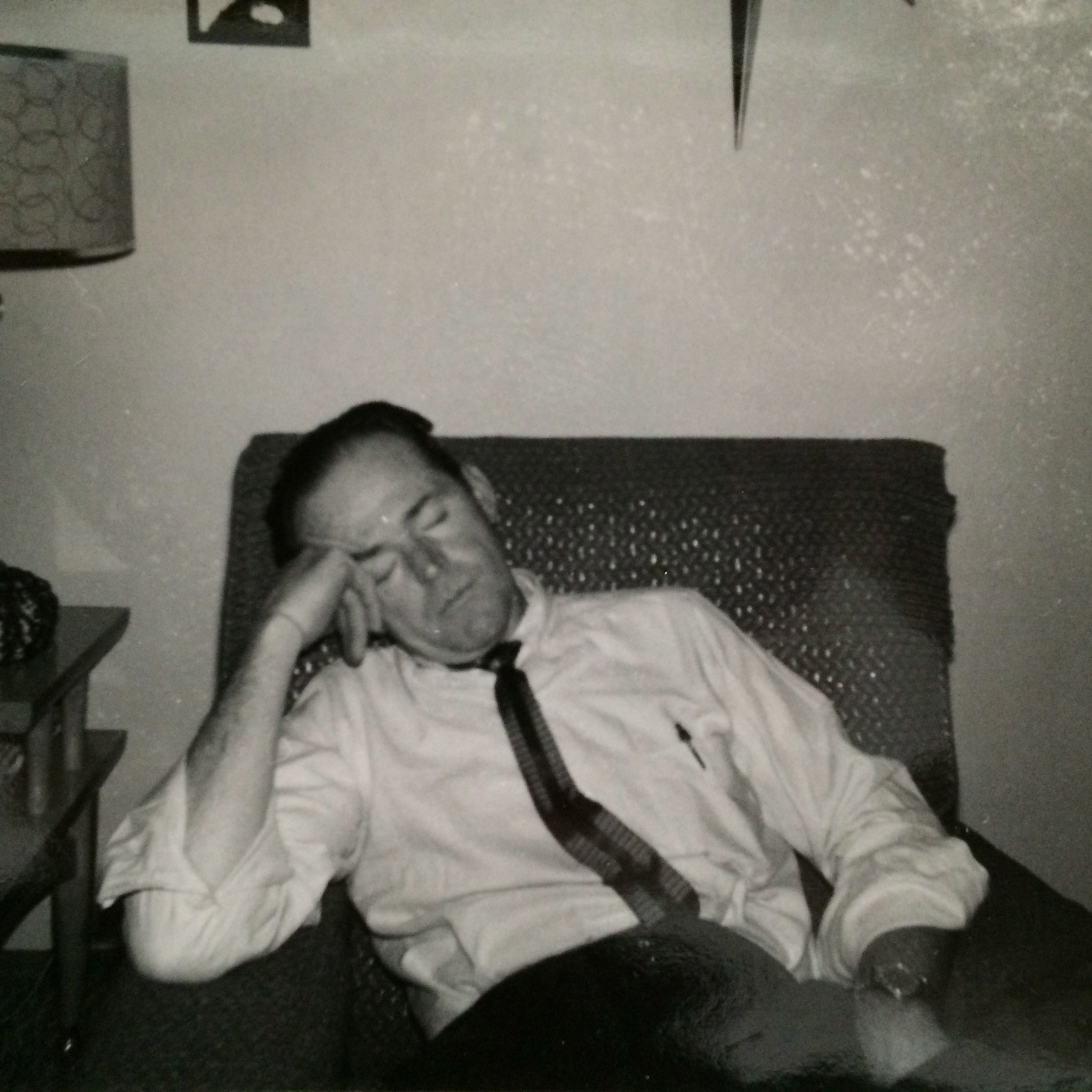
He taught me the value of an after-work nap!

I sometimes think my dad lived a “small life” because I only remember his years as a father and sometimes forget that he grew up as the son of an itinerant baker who took the family from small town to small town, from North Dakota to Montana, setting up shop and trying to scratch out a living.

My grandfather, Lee Waldron, was absolutely beloved by my sisters and I, but I learned long after his death that he was a binge drinker and would disappear from the family for days at a time and then return and not drink for months when he was younger. My dad never once complained or even made reference to how difficult his life must have been with such instability.

full_3470_109854_MiniDoilyTatting_2

By the time I knew my grandfather, he had traded alcohol in for his ever-constant coffee and cigarettes. His other addiction was to tatting, a delicate kind of crocheting that he picked up somewhere and plied constantly, producing everything from simple doilies to large and complex tablecloths, one small piece at a time.

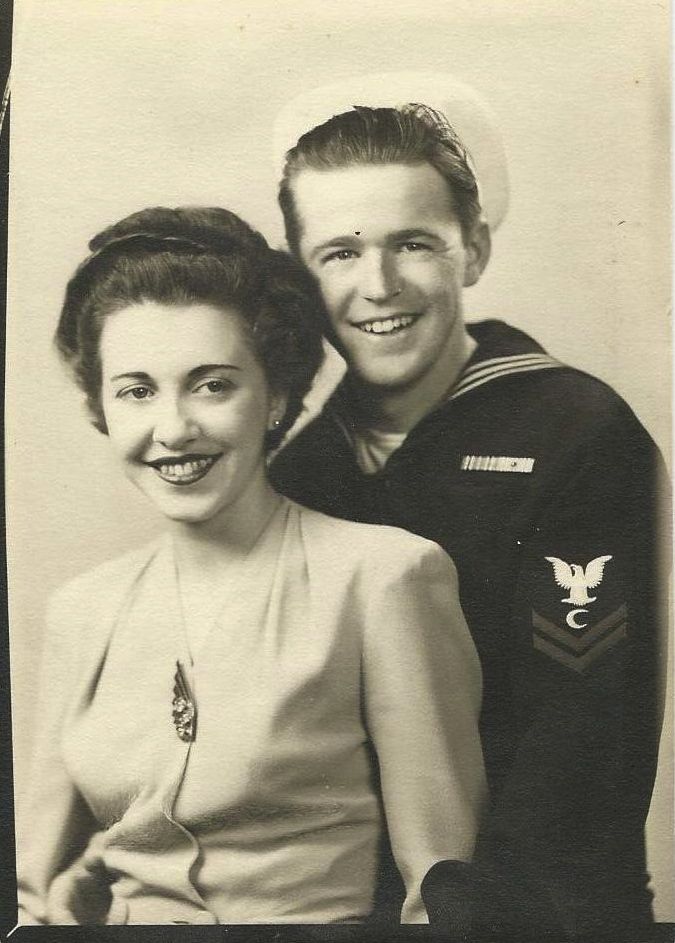
My dad’s “small life” included serving in World War II in the Navy spending much of his time in Guadalcanal but also stopping in Greenland and other far-flung locations.

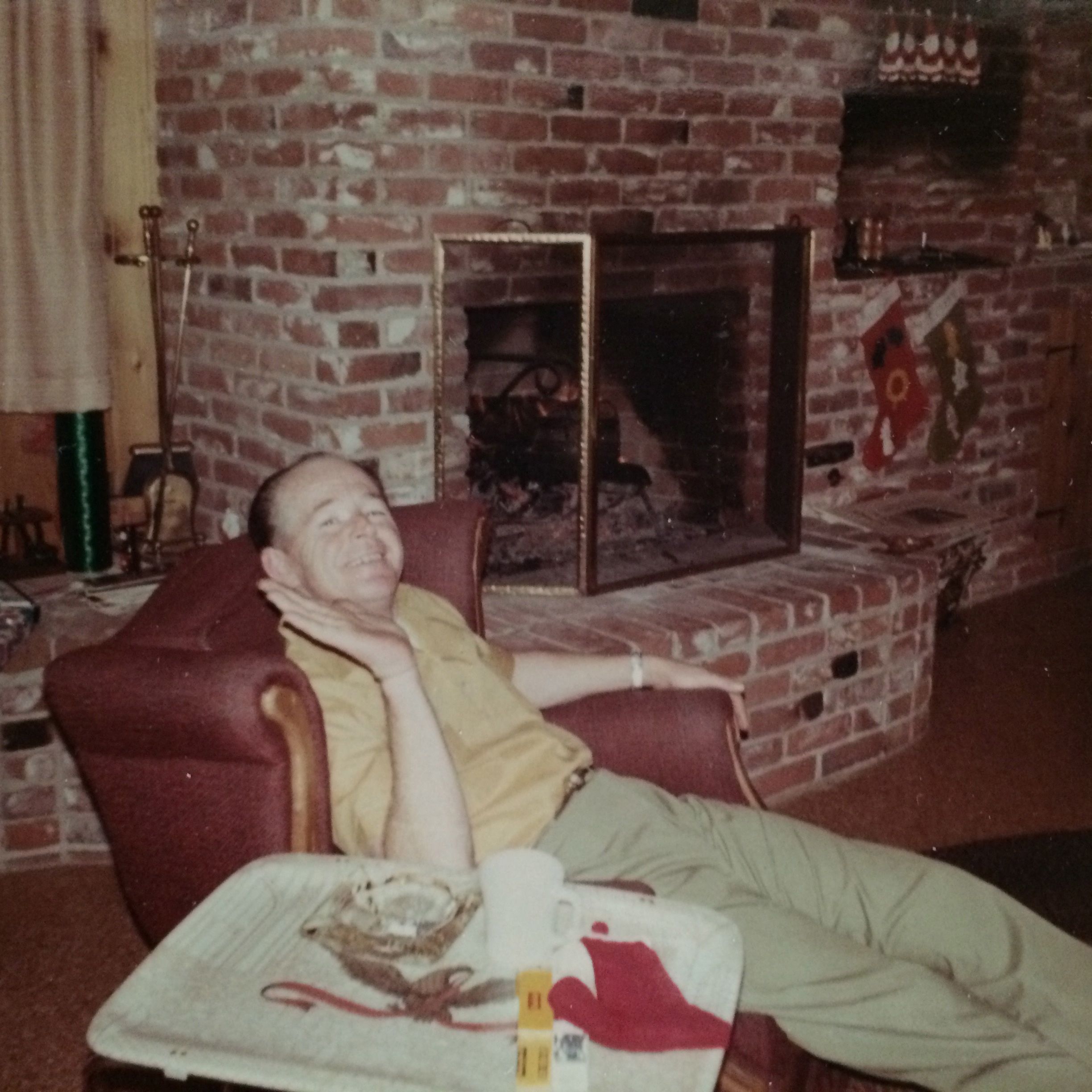
My memory of him though was simply that he was the kindest, funniest person in my life. I believed he re-filled the ocean every night with the garden hose because he told me once that he did. I remember how he laughed off the time that I kicked a hole into the wall of the garage when I was expecting to be in deep trouble. I remember how he was the only one that I wanted to tell about my first real kiss.

dadhappy

It still kills me to think of his last few years being full of pain and his struggles with dementia. He deserved so much better. He was a good man.

It kills me that I didn’t tell him that every day. He brought joy to the people around him. He worked hard his whole life and served his country when called on to do so. He took care of his family and loved his wife, his children, and his grandchildren. He was the kind of man that every man should strive to be.

And guys like him don’t get any awards. I should have told him every day that he was my role model, that he was the reason I had succeeded as a teacher and (I hope) as a parent. It kills me to think that he may have died not knowing just how special he really was.

Maybe that’s why I related to the actor J. K. Simmons’s Oscar acceptance speech this year when he, with little context, urged the crowd to, “call your mom, call your dad. If you’re lucky enough to have a parent or two alive on this planet, call ‘em. Don’t text. Don’t email. Call them on the phone. Tell ‘em you love ‘em, and thank them, and listen to them for as long as they want to talk to you.”

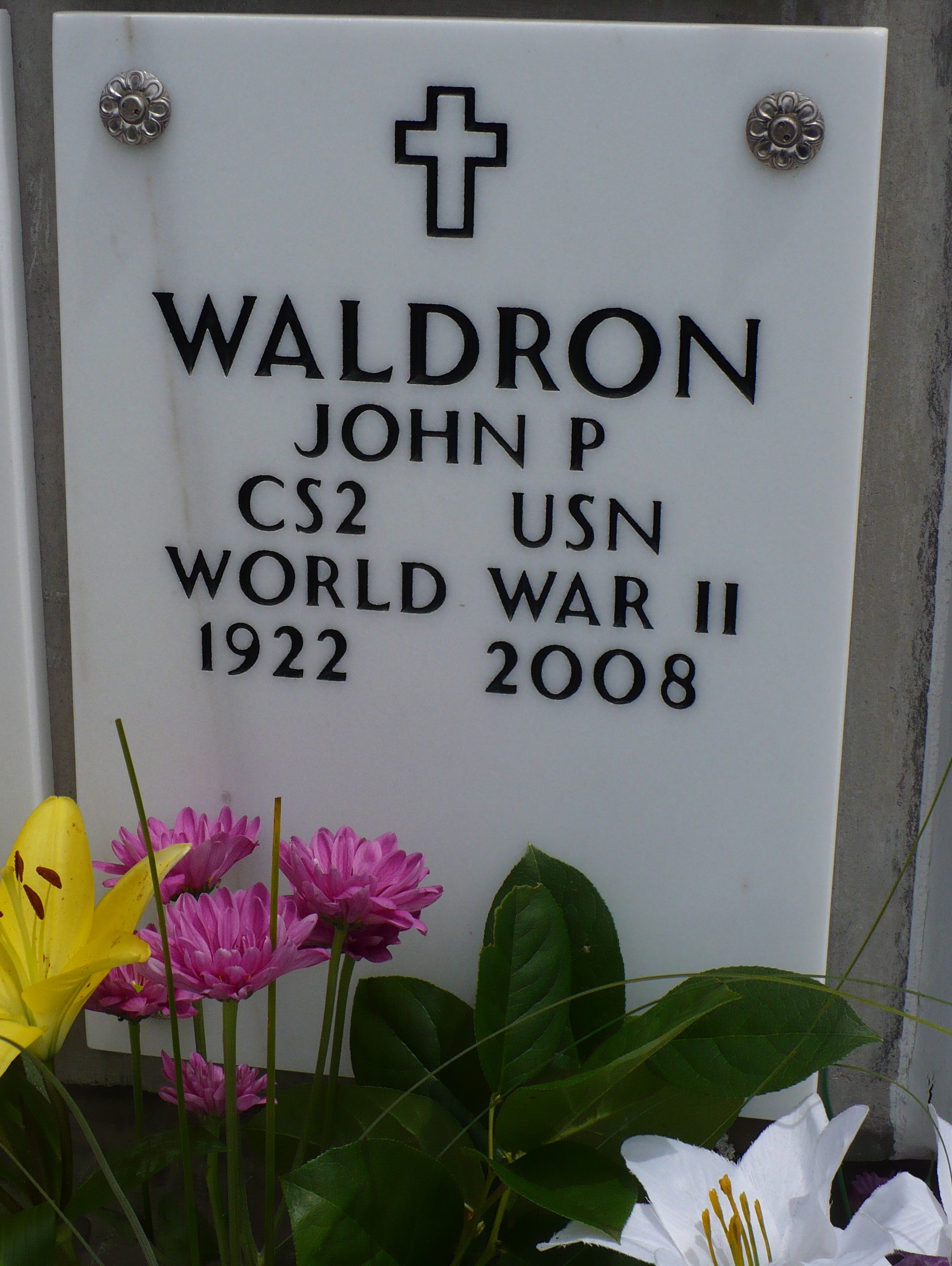
Jack Waldron was a man to be thankful for.

dadmarkerII

Unsubscribe Me

expectations

I am at war with my email. At this very moment, I am looking at the top two messages which are addressed to Frank and Henry respectively. My name is Tom.

Frank is being thanked for his prompt response to something I have never heard of and Henry is being praised for the terrific agenda that he and Phil prepared before our last meeting. I don’t go to meetings any more, and I’m sure Phil did a fine job, but I have no idea who he is.

I am plagued by these messages. I get many messages intended for “Thilda” a name I’m not sure actually exists and for months I fielded emails with reminders about “our” big “Ring the Bell!” reunion which a lot of people seem awfully excited about. Just not me.

Occasionally, I will get focused and purposefully spend a solid hour “unsubscribing” from every junk email that is cluttering my inbox. Somebody, somewhere besides thinking I am Frank, Henry, and Thilda also thinks I am a doctor, so I get tons of professional medical emails. I cannot seem to convince them that I am not a doctor and have no interest in being one unless they are giving out free samples of medication that makes me feel good.

Likewise, my home phone’s only purpose seems to be to field pitches for donations, something I thought we were supposed to be protected from now. Usually, I just ignore the landline entirely, but occasionally I will go on a rampage and answer every call, demanding that I be put on their “do not call” list once they take a breath in making their pitch. It’s frustrating and tiring and does not seem to diminish the plague of annoying, nap-interrupting rings.

My impulse to “unsubscribe” has recently gone beyond the relatively minor annoyances of email and phone calls. As I see the triple tidal waves of Thanksgiving, Christmas, and New Years, I find myself wanting to find a way to simply say, “No, thank you.”

Please know, I love spending time with my family. What I chafe at are the rites and rituals that have become ingrained are increasingly codified even as our family ages and changes. I feel trapped by trying to meet the needs of every group of relatives and how hard we seem to work at not offending anyone and keeping everybody happy. People build up raised expectations of what the holidays will bring and are inevitably disappointed. Increasingly, we do not seem to know what or why we are celebrating.

Unknown

I do not hate the holidays. I am not yet ready to draw the drapes and not allow entrance into my Grinch-cave. I truly want you to have yourself a merry little Christmas. I hope you roast lots of chestnuts on an open fire (as long as you mind the wildfire conditions here in SoCal). I sincerely want you to sit with friends and sip your peppermint mochas out of your bright red Starbuck’s cups happily ignoring the whining of evangelicals and Republican presidential candidates. Stay up late and watch the “Christmas Story” marathon while you bake cookies and make hot chocolate. Sing carols, enjoy the light displays, stay up until midnight on New Year’s Eve and kiss someone you really like while you brave the crowds at a fireworks show.

I hope that someone actually tells you that all he wants for Christmas, is you.

I, however, am just ready to tap the “unsubscribe” button when I get the official “THE HOLIDAYS ARE HERE!!!” email. I’d like to sneak away to some place tropical, with any family members who’d like to come as long as we don’t bring a tree, any lights, tinsel, wrapping paper or songs by Nat King Cole.

I’d like to sit on the beach and enjoy their company and talk a little bit about how our last year went, catch up on their stories, and think a little bit about what we would most hope for in the year to come.


Men: Why It’s Important To Keep Your Mouth Shut

0614-1-700x400

Even though this group is short on male contributors (and therefore readers), I wanted to share this piece–sort of as a public service.

Please remember my previous disclaimer. I love women. Love, love, love them. They are wiser, more beautiful, more loving, and more compassionate than men are. I have many more female friends than I have male friends. So, I hope you will still be talking to me after reading this. Or even better—leave a comment and tell me if, how, and/or why I am wrong. I will offer you my sincerest apology.

But, I’m not wrong. Not about this.

There will be times, many times if your relationship is long-term, when your female partner will come to you needing to talk. She will come to you with a problem about her friends, her work, the next-door neighbor who annoys her, her physical or mental health.

She will be distressed and clearly in need of your compassionate attention, and as a good friend and partner, you will listen patiently, occasionally uttering sympathetic noises (they don’t have to be actual words), indicating that you really care about her dilemma and that she has every reason to feel as though the world is ending and that she is currently, at this moment, the most justifiably unhappy person in the world.

Once she has exhausted herself, she may then look at you expectantly. And now, you must be very, very careful, my friend.

As men, we like to fix things. We are hard-wired to it and conditioned by our society to assess a problem and come up with a solution. If you have been smart enough simply to listen and let her talk uninterrupted, congratulations. But while you’ve been waiting for her to finish, undoubtedly you’ve been thinking about how to fix her problem, thinking about her best course of action. Her solution, you think, is painfully obvious to you.

If you are smart, rather than suggesting any practical solutions, your best play here is to shut the fuck up.

Why? Why not help her with her problem and “fix” it like you would a dripping faucet or squeaky door? After all, she wouldn’t be sharing all of this if she didn’t want your input, right?

Wrong. Dead wrong. Your solutions are the last thing she wants right now. Why? Because she already knows the solution, already knows what she has to do next. Remember, she is smarter than you.

You look confused. This is normal. Try to get used to that feeling. Embrace it.

All she wants from you right now is for you to empathize with her, to agree with her. In a pinch, you can even repeat things she just said to you with added emphasis to show that you were listening, that you understand, that you care.

In fact, as spontaneous and anguished as her recital may have been, you may be the third or fourth person with whom she has had this exact same rant. She most likely has approached her girlfriends first, and they’ve already sliced, diced, and dissected this problem over wine, chocolates, and ice cream. They will have tried to sooth your partner with affirmations and oddly communicative woman noises that we (males) cannot duplicate or understand, and they have supplied her with the kind of comfort that only calories and alcohol can bring.

Even knowing this, you will have to battle your impulse to help her slap a patch on the problem. If you find yourself start to say something like, “Well, you know, you could…” or “It seems to me like the best thing to do…” or even worse, “Well, if I were in your place, I’d certainly…” put both hands around your throat and squeeze until you are unable to speak.

Make all of your responses as non-specific as possible. Remember, she’s hurt, unhappy, and angry. Take some comfort that it is not because of something you have done. “That’s terrible,” “I can’t believe this,” “You have every right to be upset,” are all appropriate. You can use any of these more than once because it doesn’t matter what you say. What matters is that she thinks you are listening, that you are concerned.

Finally, she may even articulate what she feels is the solution to her problem and what she plans to do. Your job is to agree enthusiastically. Maybe now it’s time to put your arm around her, offer her a glass of wine, take her out to dinner. After all, she’s been sorely wronged by life, and she sought you out to be her person of the moment. You are one lucky guy. Just try to keep your mouth shut.

Did Anyone Happen To Notice Where I Set My Brain Down?

memory-improvement-with-brain-games-for-adults

I never had a great memory to begin with. For years, I relied on my sister and mother to fill in significant gaps in my childhood memories, and my sister continues to be a great help with this. I apparently lived a vibrant and active life as a youngster, and I do remember significant portions of it, but other parts are long gone and have been for some time.

As I age (62 currently), I have become more and more aware of lapses in memory mostly because it is awfully inconvenient at times and also because my family tree is pretty heavily infested with dementia, and I sometimes get concerned as I feel the memories drift away.

However, I’ve gotten reassurance from a number of sources. I have a lot of younger friends who all report similar memory experiences to the ones that I have had. Ever noticed how easy it is to walk out of some movies and 30 minutes later be unable to really explain what it was all about? Need to re-read the chapter you just read last night to remind yourself what’s going on in the book you are totally into? Or have you ever had to to search your mind frantically to list the critical things you accomplished during the day when confronted with the question, “So, what have you been up to?”

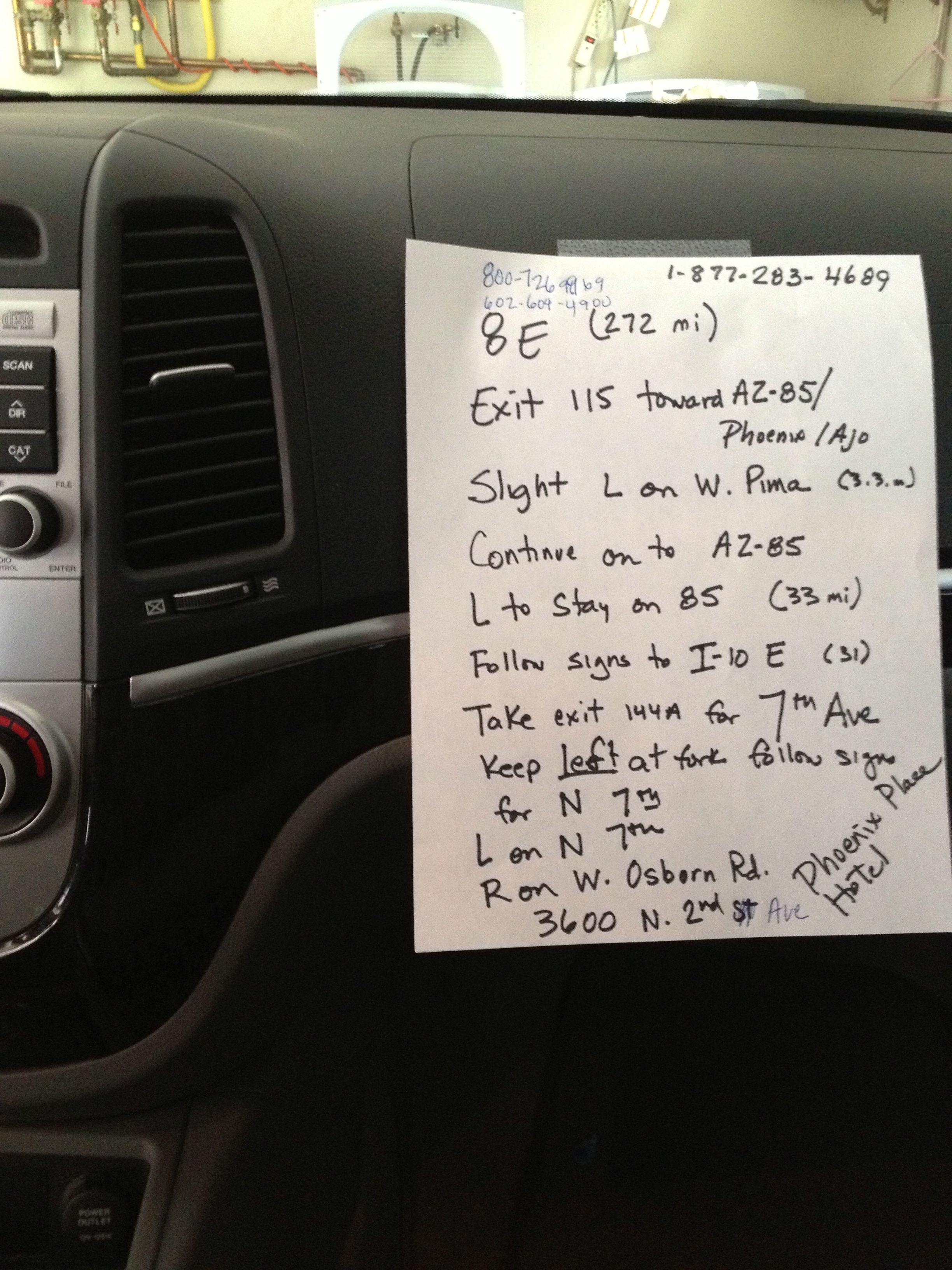
So when something slips my mind, I don’t feel so bad anymore. In fact, I’ve come to sort of enjoy my coping mechanisms. I almost always remember to put my keys and wallet in the same place every night before I go to bed. For the first time in my adult life, I not only write things down on my calendar, but actually check it regularly. I often post a big note on the bookcase that is directly across from my bed with a list of any appointments or things I need to get done the next day so I see it first thing in the morning. Since my car lacks GPS, I use directions like those below to get me on my way.

gps

However, some of the slips can be maddening. I cannot count the number of times I have marched into my garage, straight from another room of the house, and stood peering about in the heat absolutely knowing that it contains an object that 10 seconds ago I had a critical need of. I will stubbornly stand there for minutes at a time searching the room for… what? No clue. The only solution is slink back to my previous location where somehow, magically, my memory snaps back and I know exactly what tool, hardware, or device it was I needed.

I have become almost used to the fact that when introduced to someone new, my brain will vaporize that person’s name within 3 seconds of the introduction.  Even when I make a conscious effort, preparing myself to remember a new person’s name, something erases it upon arrival. I’ve become so resigned to this that I am less and less bashful about breaking in with, “I’m sorry, and you said your name was….?”  I take some comfort in the number of times they too have had to ask me my name.

Maybe we are simply so overstimulated by the barrage of information that we have to process that our brains just can’t keep up.  I tell myself that often because I often forget what I’ve already told myself.

I have, however, become convinced that I do have one particular memory disorder so unique that I have named it—displacia. It is a condition that causes me, most frequently in the kitchen, to search for a needed object in the cupboard or drawer exactly one cupboard or drawer over where the object lives. If I need some Comet to clean the sink, I will find myself staring dumbly at baked and canned goods wondering what in the hell I am looking for, knowing I have no interest in baking or cooking. But if I should need some corn meal, my first stop will likely be next door where we keep all of the cleaning supplies, again staring, stumped and confused.

So I now look at memory as a sort of game, even as a battlefield, where I know I have to use my wits to keep my life in order and to fill it with moments that are landmarks I simply must not lose. I do not want to become an unmoored boat that simply slips away from the dock, having forgotten to load up with memories that make me who I am.

Human-Brain

Montreal Afternoon

notredame

On a recent trip that included a visit to Montreal, my wife and I stood outside the Basilica de Notre Dame trying to decide if it was worth 5 bucks each to go inside and look at a church. As we rested, standing together near a fountain in the church square across the street enjoying the shade on the warm and humid day, I started to notice a street musician with his electric guitar hooked up to a practice amp. He had just begun singing a song that I recognized, but did not know the title or the original artist.

The song (I later found out) was Chris Isaak’s Wicked Game, and as the tune echoed out over the square it began to lift me as I took in the milling crowd, the façade of the church, the feeling of my wife’s hand in mine. It was as if I had entered a movie where time had slowed and everyone around me was moving at half-speed. The warm breeze was a caress as the tune soared and echoed and leaves from the trees fluttered down over us. My wife didn’t understand when I refused to move until he had finished the song because, of course, this my moment. The song had made that fleeting moment perfect for me and there were no words that were adequate to explain.

I felt a longing for the song to go on, for the moment to continue, but of course, it did not and life sped up again and the momentary magic disappeared. When he finished I went over to drop a couple of bucks in his guitar case and tell him that I had enjoyed the song, but it was an inadequate tribute.

If I had heard the same song on Wednesday night instead of that Tuesday afternoon, or if I had been walking through a subway tunnel instead of in front of the church, it might have been distracting or annoying. If it had come on the radio, I might have changed the station.

But sometimes music has the power to simply stop me in a moment, to define that moment and freeze it in my memory. For me, a Montreal afternoon will always belong to a mournful song and a solitary singer.

Hating the Dating

For a while there it seems like we were getting a lot of stories about dating. It’s been like a wave and most of them seem to be horror stories of some kind. You are all reinforcing the notion that I have had for some time now that if ever I were to become single again, either through divorce or unfortunate accident, that I would happily embrace the single life.

First off, I’ve been out of the dating scene for over 40 years, and it now seems like the use of on-line services is a must. So that means I’d have to create a profile right? Something with just enough honesty, but emphasizing my good points and minimizing the bad ones. I tried unsuccessfully to get on a site and look at what the elements of a profile were, but I’m guessing it would go something like this.

Interests: To start with I’m interested in all things outdoors, such as rock-climbing, running marathons, backpacking, surfing and BASE jumping. I’m interested in all of these things and think anyone who can do them would be a real blast to hang out with. I just can’t physically do any of these things any more. So my actual interests run toward napping, reading, movies, concerts, music of all kinds, napping, gardening, small backyard projects, napping, beer, eating out and travel. Did I mention napping?

Personal qualities: I am patient, except for when I am not. I have a good sense of humor—or at least I think I am funny. I am suspicious of spontaneity, generally expecting some kind of disastrous outcome. I love being around free-spirited people, I am just not one of you. I am filled both with a sense of adventure and a sense of impending doom. I am often confused.

See, I can feel the left-swiping starting already.

I’ve mentioned that I don’t show or share emotions easily because, as vulnerable as I can be in my writing, I’m afraid of them in real life. I have this unfortunate habit of developing a crush on nearly any attractive woman who is nice to me. It’s not anything I act on (in most cases) but the fact that those unruly emotions can burst so easily from me scares me, and to begin dating full of hope and expectation just to be crushed by rejection eventually leads me to feel that being alone would not be so bad.

And not getting rejected could possibly be worse! All of the uncertainty, complexity and commitment? I’ve been trying to make that work, more or less successfully, for all these years, but would I really want to start it all over?

A plan is already beginning to form in my mind just in case. In one scenario, I see myself getting rid of the house, downsizing to a small apartment in an area full of bars and restaurants, getting a much larger television than I could possibly need, and maybe a cat–really independent cat who hangs out in the apartment just so I won’t feel like I’m always talking to myself.

In scenario 2, one of those attractive women who is nice to me casually mentions that she is looking for a roommate, preferably male, and I end up with a companionable person, without commitment or expectation, who is pleasant to look at and nice to talk to. Sort of a replacement for the cat in scenario one.

My very best wishes to all of you who are out there doing the dating thing. I admire you and hope that you will soon stumble across a really nice, hopefully sane person who shares your interests and personal qualities, or at least is willing to tolerate most of them.


Rut or Routine?

It matters, right? I mean, we sort of admire our friends who have established healthy work or exercise routines and have a certain stick-with-it-ness. But if we look at our own lives and feel we have fallen into certain habitual behaviors, we think that is bad. Or is there any difference?

I know that I certainly value routine and ritual in my life. Nearly every morning I get up between 6:30 and 7:00 in the morning and after washing my face and brushing my teeth, I shamble off to the kitchen, pull out the toaster, load it up with a whole-wheat English muffin and pull out the almond butter and blackberry jam that I will eventually slather over each half. I buy two jars of the blackberry jam from Trader Joes whenever I am there because I don’t like to run out and I don’t like to substitute.

Once I’m sure I am truly awake, I get in my car and drive the 1.3 miles my neighborhood Starbucks, grab the local paper to go with the New York Times which I have delivered, and pick up the 20 oz cup of delicious caffeine that will assure that within one-half hour, my heart will truly be functioning at full power. People chide me over this habit and I understand that brewing one cup of coffee at home would be more sustainable and efficient, but I like having other people make my coffee for me.

I settle into my chair in the family room and scan quickly through the first two sections of the local paper while I sip the first and best 20% of my coffee. I thin get ready to read the sports section which is always more satisfying if I already know that I get to read about a Padre victory from the night before.

This moment is my signal to get up and prepare my English muffin to go along with the sports section and the rest of my coffee. Besides reading the articles, I enjoy studying the box scores of other teams and players that I follow. Then I’m on to the Times for a more in-depth look at anything that is of particular interest to me.

By around 9 o’clock it’s time to begin on whatever to-do list that I’ve created for myself that will keep me busy for the rest of the day.

Now if this routine, which I repeat day after day, gets disrupted it’s not like I get a nervous tic, or have to take three showers, or lock and unlock the front door five times. I won’t go all Rainman on anyone. If I travel, I don’t need to pack up my jam and a travel toaster. So, am I in a rut? Is this habitual behavior killing my spontaneous spirit?

For now, I don’t care. It’s just comforting. I like it. For now, it’s my way of welcoming the day.

Flirting With Insignificance

Day 10

Once I started teaching seniors, I looked forward every year to the day I would begin to introduce them to the concept of existentialism. I felt I had to go all Albert Camus on them because The Stranger was one of the central lit pieces that I taught.

I relished immersing them in the basic tenets of this philosophy, essentially alien to all of them, and for one or two days in a row I played devil’s advocate to every question, objection, personal experience, religious belief that they could challenge me with. For two days I would crush their spirits into the belief that they were living insignificant lives in an absurd and meaningless universe, continually verging on the edge of the abyss of despair and alienation.

Of course, then I would have to spend the next three weeks reassuring them that existentialism was simply one of many world views and not one that I was promoting. To avoid parent phone calls, I had to swear to them that I wasn’t anti-religion, that it was fine with me if they believed in God and the afterlife, and that, of course, they were leading meaningful lives.

But, for some of them, this one lesson was an earthquake. The fact that anyone could believe in such a philosophy, that it was a well-developed, much discussed pillar of post-modern society, that I could fill up a 40-minute power point with its principles was a shock to some 17-year-olds who had never considered a point of view that varied from what all of their families and friends had at least pretended that they believed in.

One student refused to speak to me for the rest of the year.

Part of the lecture was to discuss why existential thought considers an individual’s life to be meaningless. To illustrate this I had them think about how our 70 or 80 or 90 years on this planet compared to the eons that came before us and the millions or maybe billions of years that would follow our short lives. I asked them to add that to the fact that we are on a small planet, in a small galaxy, in the midst of an enormous universe, the size of which is, for me, incomprehensible.

So given all that, just how important was any single action, thought, or decision that any one of us might make? It usually got really quiet after that.

It took me a while to explain why I found this aspect of existentialism to be particularly freeing and not depressing. As someone who constantly second guesses himself and agonizes over sometimes trivial decisions, it helps me to be reminded that the world doesn’t turn on my decision on when it’s appropriate to buy a new vacuum cleaner or get the garden weeded.

It’s where I’d try to lead them to eventually—that meaning comes from within. That an existential point of view empowers them to wipe the slate clean and take responsibility for looking at their actions and decisions and figuring out for themselves what ultimately a meaningful life looks like.

Note: Most of them still liked me by the end of the year.