Shakespeare Sunday: Everyone Dies

Happy Sunday everyone!  Last week when I wrote about Sonnet 18, I mentioned the irony in how the speaker in the poem brags about the immortality that his poem gives to his loved one’s beauty, when Shakespeare spends an awful lot of time reminding us of our fragile grasp on life.  That brought me back to Sonnet 73. Go ahead and read it again if it’s been a while.  I’ll wait:

SONNET 73

That time of year thou mayst in me behold

When yellow leaves, or none, or few, do hang

Upon those boughs which shake against the cold,

Bare ruin’d choirs, where late the sweet birds sang.

In me thou seest the twilight of such day

As after sunset fadeth in the west,

Which by and by black night doth take away,

Death’s second self, that seals up all in rest.

In me thou see’st the glowing of such fire

That on the ashes of his youth doth lie,

As the death-bed whereon it must expire

Consumed with that which it was nourish’d by.

This thou perceivest, which makes thy love more strong,

To love that well which thou must leave ere long.

Just to bring a little more rigor to Shakespeare Sunday, I actually read some analysis of this poem, but what I was looking for was to see if there was any record of when each poem was written.  I was curious to see how much later 73 was written than 18.  No luck.

However, I did find lots of analysis and deep parsing of this lovely poem which would have completely ruined it for me, but I long ago quit paying much attention to literary criticism.  I enjoy reading some analysis to inform me of just how ignorant I might be when I start writing about literature, but am sometimes appalled at the nit-picking I start to find.  I sure hope that I didn’t kill the enjoyment of the poetry that I read with my students in a similar manner.  I did write about my approach to poetry as a teacher some time ago in a piece I called “I Don’t Hate Poetry.”

One analysis found the three metaphors that Shakespeare uses to be “cliched”–another writer might call them “timeless.”  Regardless, as a teacher it was great fun to play with these metaphors with students because most young people simply do not think in terms of metaphor.  They do not consider that the seasons, or that the cycle of the day, or that the burning of a fire is kind of like the progression of life from youth to death.

I particularly like the first four lines.  I’m not sure you can find a better example of iambic pentameter (just supposing you were looking for one) and they are maybe my favorite four lines of poetry to read aloud.  The image of naked branches as “bare ruin’d choirs, where late the sweet birds sang” seems just perfect; naked branches “where yellow leaves, or none, or few, do hang.”

In the following quatrain, the speaker thinks of himself as being in the “twilight” of his life “which by and by black night doth take away.”  I was always intrigued by Shakespeare’s characterization of night as “death’s second self, that seals up all in rest.”  To think of sleep as akin to death seems totally appropriate to me.  It reaffirms my daily response to the overly-cheerful baristas at Starbucks who greet me every morning between 5 and 7 AM with the question “How is your day going?”–just a horrible question to ask me BEFORE I’ve had my twenty ounces of morning Joe.  The only thing I can think of to say is, “Well, I woke up this morning.”

In the third quatrain, the speaker admits he is no longer a bonfire, but just a collection of burning embers, soon to be extinct.

In the final couplet, we come to understand that the speaker seems to be speaking to a younger person and warning or advising him or her that one must “love that well which thou must leave ere long.”  Life is short.  Live long and prosper.

As I was warming up to write this piece (something that goes on all week!), I thought about that scene from “Dead Poet’s Society” when Robin Williams character takes his boys down to view the pictures of long-dead alumni of the fictional Welton Academy and delivers his famous “carpe diem” speech:

“Now I would like you to step forward over here and peruse some of the faces from the past. You have walked past them many times. I don’t think you’ve really looked at them. They’re not very different from you, are they? Same haircuts. Full of hormones, just like you. Invincible, just like you feel. The world is their oyster. They believe they’re destined for great things, just like many of you. Their eyes are full of hope just like you. Did they wait until it was too late to make from their live even one iota of what they were capable? Because you see, gentlemen, these boys are now fertilising daffodils. But if you listen real close, you can hear them whisper their legacy to you. Go on, Lean in. Listen… Do you hear it? (whispers) Carpe. (whispers again) Cape. Carpe Diem. Seize the day boys, make your lives extraordinary.”

Some critics thought this speech sucked also, but I like it.  Any movie that showed a teacher teaching with mindfulness and passion was OK with me.

Hope you’ve had a great week.  I promised my mid-week piece would be a check in on “Surviving the Trump Apocalypse” and I will try, but “Retired, Not Dead” will be on the road to Seattle, WA for a well-deserved vacation,  and I may just be having too much fun to write about politics.

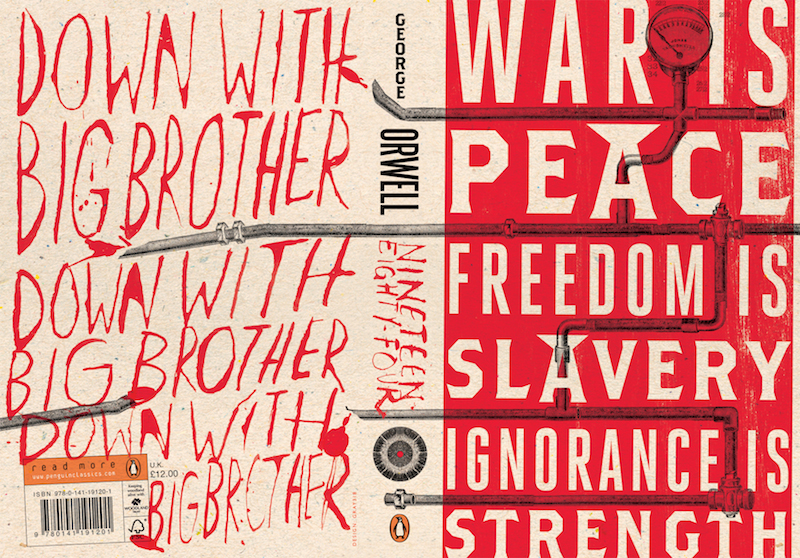
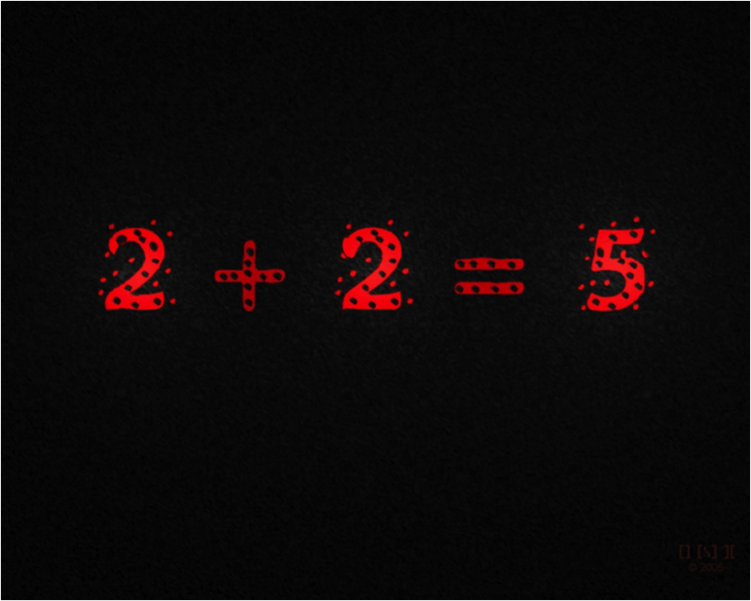
The Continued Relevance of “1984”

When 45 was elected there were lots of postings on Facebook about the uptick in people purchasing and reading or re-reading George Orwell’s 1984.

I did not rush out and get a copy because I was already depressed enough and revisiting what I remembered of that grim world that Orwell first wrote about in 1950 did not appeal.  I stayed away from it until a former student reached out on Facebook, and we decided to create a two-person book club. After reading The Handmaid’s Tale, we decided we would take on 1984.

As I read, I was surprised at how straightforward the narrative was, and while I could see some parallels to the political climate that we have been plunged into since the election of 2016, it wasn’t until half-way through the book that I came across some passages that really resonated.

I’m sure that some writers and thinkers have done much more work on this than I’m willing to so I will stick to a couple of parallels that were particularly striking.

Overall, I do not believe that 2016 looks like the world envisioned in 1984.  After all, we are a vibrant and diverse culture. Personal liberties are mostly still intact.  Their is robust political discussion, conversation, and protest that seems unending. The judiciary and individual states have managed to blunt some of 45’s excesses, and many of us are counting the days until the 2018 elections when some of our diffuse outrage might be turned into significant electoral action.

However, there are a few haunting similarities.  Just as Orwell envisioned the ministries of Truth, Peace, and Love that were all dedicated to their opposites, 45’s cabinet-level nominees seemed to have been hand-picked to destroy or work in opposition to the very principles of their departments.  The department of Justice under Jess Sessions is devoted to rolling back any initiative that was dedicated to advancing civil rights, and is working hard to find ways to increase voter suppression.  The Environmental Protection agency is being gutted by Scott Pruitt, and it appears as though every effort to protect our air and water that has been implemented over the past 10 years is going to be eliminated as a sop to coal and oil interests just at a time when many states are surging forward with innovations in renewable energy.  Just today, 18 states sued Betsy DeVos, the Secretary of the Department of Education, for trying to stop regulations that would protect students and parents from being defrauded by private, for-profit colleges.

The odd part for me about all of this is that the partisan divide is so deep that even though these policies hurt everyone, the polling seems to show little change since the election. 45’s base voters are as rabidly enthusiastic as ever although there has been movement among independent voters.  There continues to be a solid majority that are unalterably apposed to the man.  Of course, that was true on election day also.

The second parallel that was most striking to me was how the government of 1984 saw the power of re-writing the past and continually revising history in order to manipulate and control the masses.  Winston, of course, knows this because he works in the Ministry of Truth where he is continually making changes to history books and historical documents to make them align with the Party’s changing positions.  He tries to impress the enormity of this mass manipulation to his lover, Julia with an impassioned explanation: “Every record has been destroyed or falsified, every book has been rewritten, every picture has been repainted, every statue and street and building has been renamed, every date has been altered.  And that process is continuing day by day and minute by minute.  History has stopped.  Nothing exists except an endless present in which the Party is always right.”

He is disappointed when his young lover shows little interest.  She is so jaded that Winston’s news does not surprise her, just confuses and bores her a little.  Of course the government lies. Yes, people are “disappeared.” Orwell describes her condition by saying that, [o]ften she was ready to accept the official mythology, simply because the difference between truth and falsehood did not seem important to her.”

Trump and his minions unapologetically spew out lies and contradictions at such a dizzying pace that I fear the populace has become anesthetized.  The New York Times has compiled an impressive list of lies (“President Trump’s Lies, the Definitive List”) that Trump has foisted on America since his inauguration and despite the enormity of it, or maybe because of it, the populace seems to have grown numb.  Thirty-five percent of Americans believe him or believe it doesn’t matter that he lies, and sixty-five precent have come to not believe anything that he says.  All investigative reporting is quickly branded as “fake news” and the White House is always able to present “alternative facts” if asked.  The deliberate confusing of all of the narratives surrounding the enormity of the scandals that are emanating from this administration has left many people unsure of who to believe.

Winston still has the capacity for outrage and the desire to join what he perceives as the resistance while Julia has accepted the duplicitous nature of the world she lives in and rebels through hedonism and other small defiances.

Seems like such a short time ago, we had a devout interest in protecting the environment, furthering the cause of civil rights, and working to provide for the good of all Americans.  We had a president who most Americans trusted and who seemed to be trying hard to maintain a the kind of sense of dignity and decorum that we used to expect of our presidents.

We aren’t in the world of 1984 yet, but we certainly have moved closer to it.

Shakespeare Sunday: Poet Claims, “Yes I Am That Good.”

Sonnet 18

Shakespeare’s Sonnet 18 was always a lot of fun to work with in the classroom because students want to view it strictly as a love poem and because so much of the poem turns on the single word “this” in the very last line.  In case you’ve forgotten all of your Shakespearean sonnets, here it is:

Shall I compare thee to a summer’s day?

Thou art more lovely and more temperate:

Rough winds do shake the darling buds of May,

And summer’s lease hath all too short a date;

Sometime too hot the eye of heaven shines,

And often is his gold complexion dimm’d;

And every fair from fair sometime declines,

By chance or nature’s changing course untrimm’d;

But thy eternal summer shall not fade,

Nor lose possession of that fair thou ow’st;

Nor shall death brag thou wander’st in his shade,

When in eternal lines to time thou grow’st:

So long as men can breathe or eyes can see,

So long lives this, and this gives life to thee.

Easy to see why it is looked at as a love poem, yes?  I even found it listed by one website as a poem suitable for Valentine’s Day, and for the first eight lines, I could not agree more.  The poet finds his loved one more beautiful than a summer day, “more lovely and more temperate.”  After all, a summer’s day can have “rough winds” and can be too hot or perhaps obscured by clouds.  The poet recognizes that “summer’s lease has all too short a date” and as all things in nature “every fair from fair sometimes declines.”  All things natural pass through their time of youth and beauty, decline and eventually die, a theme Shakespeare returns to time and again.

But line 9 surprises us.  If all things natural (including his lover’s beauty) decline, how can he say that “thy eternal summer shall not fade”?  He spends three more lines declaring that her beauty is immune from time’s ravages or the “shade” of death.

How so?  The final couplet is the poet’s tribute to himself.  He has given her immortality because  “So long as men can breathe or eyes can see” they will be able to read his poem, the poem which has frozen her beauty in time. He assures her that “So long lives this (his poem), and this (his poem) gives life to thee.

Trying to figure out those last two lines used to drive my students crazy which was, of course, another reason I loved this poem.

Have a wonderful Sunday.  Check in later this week for some thoughts on Orwell’s 1984, and it’s also time to check in on how things are going with Surviving the Trump Apocalypse.  Cheers!

Shakespeare Sunday: Macbeth Needs A Nap

Welcome my 12 faithful congregants!  If you’d turn your hymnals to the tragedy of “Macbeth”, let’s take a look at a very short passage:

Methought I heard a voice cry “Sleep no more!
Macbeth does murder sleep”,
the innocent sleep,
Sleep that knits up the ravell’d sleeve of care,
The death of each day’s life, sore labour’s bath,
Balm of hurt minds, great nature’s second course,
Chief nourisher in life’s feast….

Macbeth (Act II, Sc II)

Even without knowing much about the context of this passage, I’ve always loved this image.  It seems to crystalized an image that I’ve always had of sleep–that it is a great healer of mind, body, and spirit. Whether it is a mid-day nap or turning in early to be able to shut my mind down to whatever may be troubling me, there is nothing like the retreat of sleep.  When I feel overwhelmed by exhaustion, worry, or anxiety there are sometimes where it is sleep alone that “knits up” and mends my soul.  Sometimes the clarity I have when I wake up is startling to me.

Of course, Macbeth has just murdered King Duncan in this scene and has a whole lot on his mind.  Not surprisingly, this little passage has been analyzed deeply but there is one simple (I like simple) aspect of it that I wanted to share.

Shakespeare often uses sleep as a metaphor for death or vice versa and so mixing them so closely here makes this passage even more interesting to me. He calls sleep, “the death of each day’s life” and then follows with two descriptions of it as a soothing “balm” that can cure the pains of both our bodies and our minds.

Then he calls it “great nature’s second course.”  Hmmm.  Does that make nature’s first course life and all that comes with it–experience, love, excitement, danger, sorrow, and death?

I needed some help from Dave’s blog “The Ape Philosophy” which can be found at (apeliterature.blogspot.com).  He suggests that:

“A “ravell’d sleave” is a tangled skein of thread or yarn. Macbeth uses it as a metaphor for the kind of contravention we experience when we have so many problems that we can’t see the end to any of them.”

Truth be told though, I need very little excuse, to find my way to bed in the mid-afternoon for my  escape into unconsciousness. You know how when you can’t get your computer, TV, router, smartphone, or tablet to work properly and after maybe an hour of frustration you remember that the best medicine for anything technological is to shut it down, talk nicely to it, let it rest a bit, and then start it back up?  Sleep is like that for me.  It’s my chance to shut down, reboot, and waken, energized and ready once again to enjoy what the rest of the day has planned for me.

Shakespeare Sunday: The Madness of King Trump

I’ve decided that it’s the transitive property of equality that keeps bringing me back on Sundays to interpret Shakespeare in light of the Trump presidency.  Or maybe vice versa.  I think the transitive property (if A=B and B=C, then A=C) applies here for the following reason:  Shakespeare wrote tragedies; the Trump presidency is a tragedy; therefore a big chunk of what Shakespeare wrote relates to the Trump presidency.

I wasn’t alone in noticing this phenomena this week as there were several articles about the new play that envisions Trump as Julius Caesar.  I noted the comparison also in the Shakespeare Sunday post “Pride Before the Fall.” However, this week Trump’s bizarre Cabinet meeting brought comparisons to King Lear.  One by one, as Trump beamed, each Cabinet member fell over themselves to tell him what it honor and a blessing it was to serve him (note in the picture that, when not speaking, the Cabinet members look awfully Pope-faced).

Just as Lear invited his three daughters to express their love to him as he decides just how to partition up his kingdom, clearly someone less elegantly put these poor fellows up to this silly show.

Lear at least does it with class as he demands:

Which of you shall we say doth love us most?

That we our largest bounty may extend

Where nature doth with merit challenge.

And then the groveling begins.  First Goneril proclaims:

Sir, I love you more than words can wield the matter;

Dearer than eye-sight, space, and liberty;

Beyond what can be valued, rich or rare;

No less than life, with grace, health, beauty, honour;

As much as child e’er loved, or father found;

A love that makes breath poor, and speech unable;

Beyond all manner of so much I love you.

Just as at the Cabinet meeting, it became important to out-toady the previous speaker and likewise Regan feels a need to out do her sister:

Sir, I am made

Of the self-same metal that my sister is,

And prize me at her worth. In my true heart

I find she names my very deed of love;

Only she comes too short: that I profess

Myself an enemy to all other joys,

Which the most precious square of sense possesses;

And find I am alone felicitate

In your dear highness’ love.

It is Cordelia alone who dares to be honest, to speak truth to power.  When asked by Lear what she can say that will make him feel even better about himself than the proclamations that have come before, she says, simply, “Nothing.”  An astounded Lear, urges her on, in essence, begging her to come up with something praiseworthy, but Cordelia honestly replies:

Unhappy that I am, I cannot heave

My heart into my mouth: I love your majesty

According to my bond; nor more nor less.

For her crime, Lear not only withdraws her part of the kingdom, but advises her that from this point forward she will be a “stranger to my heart and me.”

What a moment it would have been if just one of those “leaders” had been brave enough to say, “Hey, Mr. President, do we have time to talk about some issues here.  You know, like soldiers dying in Afghanistan, congressmen being shot up on a baseball field, the entire country waiting to find out about health care changes?”

As Anna North, opinion writer for the New York Times pointed out in her article “President Trump’s King Lear Moment” (May 17, 2017) well before the above-mentioned Cabinet meeting:

He seems to lack a Cordelia who will speak to him honestly. Instead, Mr. Trump has been Regan and Goneriled all the way to the presidency, flattered and coddled by his advisers, the Republican establishment and his family to the point where flattery and coddling are useless and no amount of careful management can keep him from revealing state secrets and then bragging about it on Twitter.

That’s it for this Sunday!  Have a lovely Father’s Day wherever you are.  While you are relaxing in the recliner take a look back at the piece I posted earlier this week called “My Museum.”  You might like it.


My Museum

On my most recent visit spring visit to Phoenix, Arizona to watch spring training baseball, I took a day off to visit the MIM (Musical Instrument Museum) which had been recommended to me repeatedly by two of my best friends.

I am not a great museum visitor.  If it says to plan to stay for three hours, I’m pretty sure I will be done in one.  It’s one of the substantial differences between my wife and I when it comes to travel is that she will go through EVERY room, and read EVERY card for every part of the exhibits.  This is not a criticism.  She likes to soak in all of the details and moves through the museum at a most leisurely pace.

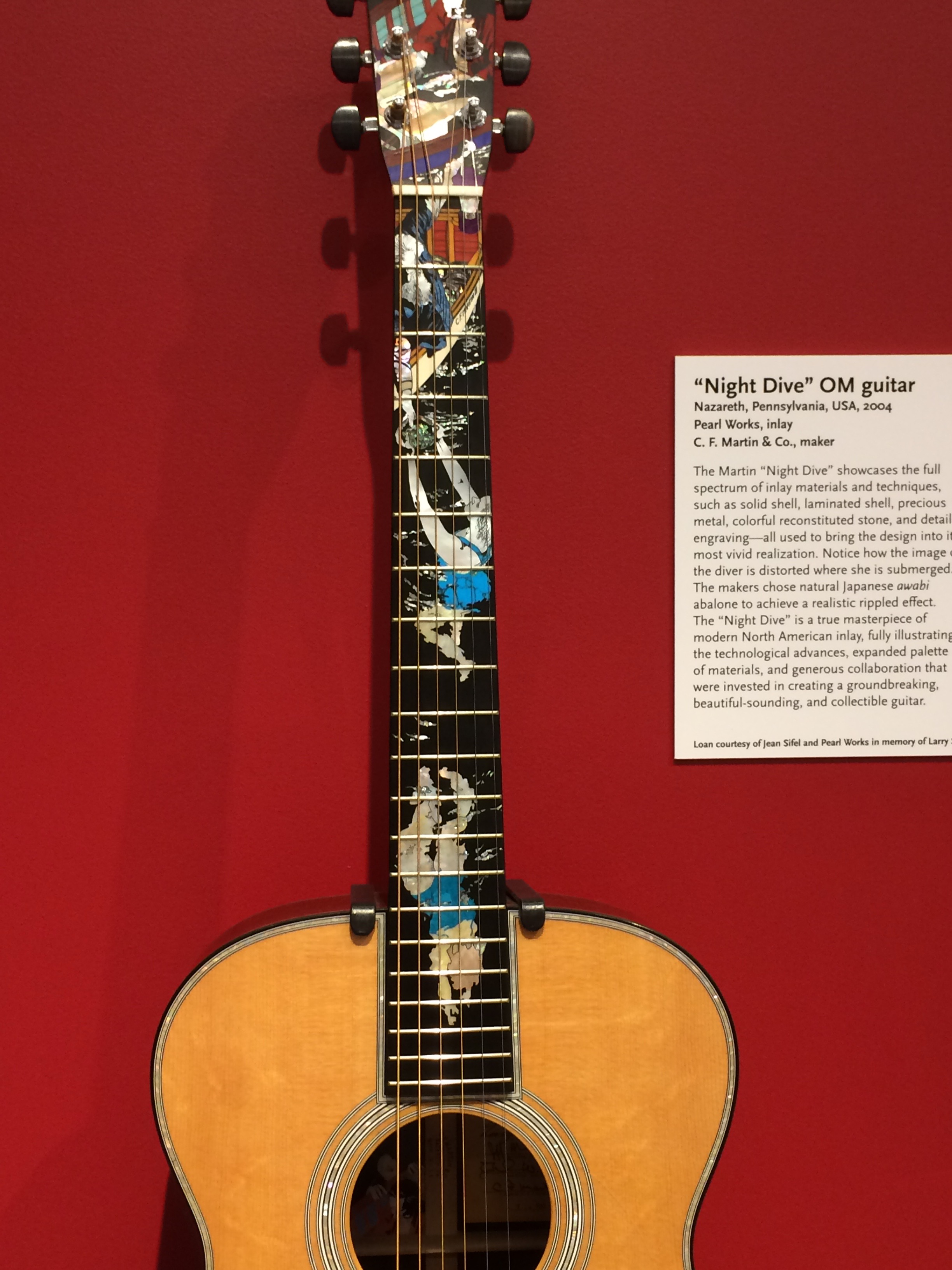
I sort of cruise through and skim a lot of what I see unless or until something really catches my attention, and then I’ll read up on it more thoroughly.  On this particular day, I found two rooms that were terrific.  One exhibit, called “Dragons and Vines” was dedicated to the art of how elements like pearl, abalone and other substances are inlaid into the fretboard and body of guitars.  The technology,craftsmanship, and flights of imagination were incredible.  The second room was dedicated to individual artists worldwide featuring pictures, videos, instruments, and outfits that they wore on stage.  I think I spent over an hour in these two rooms alone. I had to go back into both rooms twice, just to be sure I hadn’t missed anything.

I spent about 10 minutes in the entire rest of the museum which featured a vast array of musical instruments from all over the world.  It was overwhelming, and I really didn’t care about the how or why the noisemakers of Sri Lanka were different that those from Serbia.  If I had read any of the info cards on the second floor, I would have forgotten anything I learned by the time I got back to my car.  It’s why I don’t spend the time reading up on all of the historical stuff.  I just don’t retain it. I leave museums with a few highlights in my mind and a general sense of if it met or exceeded my expectations going in.  In this case, the MIM absolutely did.  I loved the two rooms that I loved.  That was plenty for me.

Museums are like our archives of our civilizations, right?  Besides teaching us about who we are, we are trying to hold on to the good stuff so we don’t forget about it.

I’ve been thinking about that as my wife and I have been going through a continual purging process around the house.   It started when we had to move virtually everything out while we were having our floors re-done.  We have thrown away and given away boxes and bags full of clothing, books, furniture, kitchen supplies, you name it.  Going through the process made us look at everything, contemplate how long it had been since we used or even touched the item (we have lived in the same house for 36 years) and soon we had cleared whole shelves and emptied multiple storage boxes.

We’ve been trying to narrow the archive, our personal museum, down to the really important stuff–to the things that will bring us joy to look at and that will enrich the lives of whomever we decide to leave these things to in the future.

I keep thinking about what I wanted to leave behind to the people I love to remember me by.  Didn’t it make sense to start giving some of this stuff away now?  I’d rather give them a keepsake of some real or sentimental value now, while I can cogently say to them, “Here’s the story behind this object and why it’s so important to me, and I want you to have it because I know you’ll love and value it just as much as I have.”

Like, I have this wine opener, a simple but elegant design, that my dad gave to me when I was 21. We met up after work on the day I turned 21, and he took me out for my first official drink.  But as we were drinking in this divey little bar, he told me what he had REALLY wanted to do for me on my birthday.  He had planned to take me to a strip club when I turned 21.  Apparently, his father had done this with him on his 21st as kind of a rite of passage thing, to expose him to the “world of men” and show him it was no big thing.  He wanted to continue that little tradition with his son, but my mom quashed his plan, so we had to settle for a drink together.  I kind of wish he had thrown caution to the wind and that we had had that moment together doing something a little salacious, just me and him.  Even though we didn’t, I appreciated that his heart was in the right place.

The fact that I have managed to hold on to this token for over 40 years makes it valuable along with the memories it holds.  My daughter Emily, who enjoys an occasional glass of wine recently celebrated her 30th birthday.  I gave her the opener with a letter explaining its history and significance to me.  I knew that she would like the thought that the gift was from both me and her Grandpa Jack.

So, as I go through every box and crate, I take a hard look at what is still stuck in our own personal museum and think about the people I love and wonder if they might like this object or that book, dedicated especially to them.  It’s easy to accumulate a lot over nearly 40 years and sometimes so much harder to begin to let it go.

Shakespeare Sunday: Smooth Talker

R: If I profane with my unworthiest hand

This holy shrine, the gentle sin is this:

My lips, two blushing pilgrims, ready stand

To smooth that rough touch with a tender kiss.

J:  Good pilgrim, you do wrong your hand too much,

Which mannerly devotion shows in this;

For saints have hands that pilgrims’ hands do touch,

And palm to palm is holy palmers’ kiss.

R:  Have not saints lips, and holy palmers too?

J:  Ay, pilgrim, lips that they must use in prayer.

R:  O! then, dear saint, let lips do what hands do;

They pray, grant thou, lest faith turn to despair.

J:  Saints do not move, thou grant for prayer’s sake.

R:   Then move not, while my prayer’s effect I take.

Welcome to the weekly literary nerd edition of “Retired, Not Dead”!

Most of you will recognize this as the very first words exchanged between Shakespeare’s “star-crossed” lovers from maybe his most well-known tragedy, “Juliet.”

OK, it’s actually known as “Romeo and Juliet” but if you’ve read the play, you know that this is really Juliet’s story.  Romeo is pretty much an accessory.  Juliet gets the great speeches, the deepest conflict, and the most achingly perfect death.

However, in the passage above, Romeo does have his moments.  It took my faithful poetry anthology Sound and Sense (Arp–9th edition) to point out to me that this lovely exchange, when lifted from the play, is actually a sonnet written as dialogue.

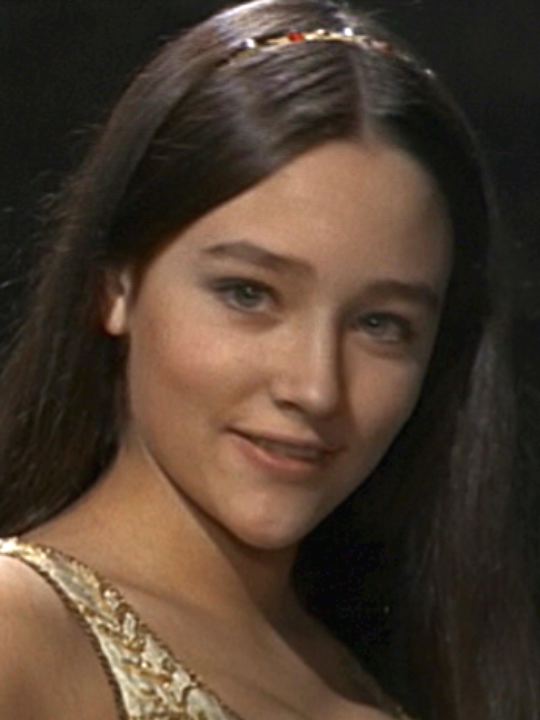
Romeo has been struck with the lightning bolt of love when he sees Juliet for the first time, as I was when I first saw Olivia Hussey playing Juliet in the 1968 film.  I  thought it was cruel for Franco Zeffirelli to unleash this 15-year-old beauty on my 15-year-old self when I first saw the film.

OK, the dialogue.  The beauty of Romeo’s appeal to Juliet for a kiss is that he frames himself (his lips, rather) as “pilgrims” approaching a “shrine” and then continues to work the worshipful metaphor with references to “saints,” “devotion, and “prayer.”  Juliet plays along as she tries to chastely and gently deflect his desire for a kiss.

Thankfully for Romeo, her resistance only lasts for fourteen lines of poetry before she allows his reverent kiss.

Ah, young love in iambic pentameter.  It doesn’t get any better than that!  Happy Sunday, everyone!

Grumpy Old Man

My wife recently made the observation, with both honesty and concern, that I was becoming a grump.

With both reticence and reflection, I had to agree that she was 100% correct.

The evidence was undeniable.  There are a growing number of things which I just find intolerable.

First and foremost is that Donald Trump continues to be President of the United States no matter how often I wake up and hope that I’ve just been having a bad dream.  Sure, there is some satisfaction in watching him careen about from crisis to crisis, constantly showing off his incompetence and ignorance.  But watching the horrifying damage he is causing to America’s reputation, his willful destruction of our environment, and his lack of concern for justice and human rights is almost as appalling as the fact that 30% of Americans still think he’s doing a good job, or at least are willing to “give him a chance.”  The hypocrisy of his backers grates on me remembering that this same 30% along with 100% of Congressional Republicans never gave President Obama a moment of support even as he advanced initiatives that would improve the lives of all Americans.

I mean, that should be enough to justify four years of grumpiness.  It is epic and bigly, and I have absolutely no control over it.  So, I think that carrying around that angst has made me hyper sensitive to little things, like noise.

I always thought I lived on a quiet street until I retired and was home more hours of the day.  Now it seems as though there is a mower or a blower or a chain saw in operation near my house (actually as I am writing, a chain saw just fired up somewhere nearby) from 7:30 AM on.  I appreciate that people are keeping their houses and yards in good shape, I really do, but couldn’t we have some established “quiet hours” in the middle of the day when I like to take my nap?  Is that really too much to ask?

And when did it become OK to carry on conversations in public places with your phone set on “speaker”?  It seems that everywhere I go now, I run into people on their phones and have to listen to both sides of the conversation when I’d prefer not to hear either of them.  I was taking my walk around a local lake and had to push myself hard to get past a lady who was negotiating with her bank, phone set on “speaker”,  and I could hear her getting put on hold and bounced from person to person and telling and re-telling the story of her loan problems.  I got anxious just listening to someone else getting the runaround!

I even feel my grouch level rising when I know someone with whom I am having a conversation has put me on speaker so that he or she can walk around the house or dust or do the dishes or god knows what.  Can’t we stop a moment and actually talk to one another without feeling a need to multi-task?

I love my smartphone.  I don’t want anyone to take it away from me.  But I don’t want to listen to your conversations.  I certainly don’t want to listen to your music (headphones, please!), and if you want to dust, or do the dishes rather than talk to me, call me back when you have time, for god’s sake.

See what I mean?  Grouchy.

It can even come down to a scrubbing sponge, wet and soapy and full of germs, left in the bottom of the kitchen sink.  I’m not a germaphobe, and I can’t even pinpoint when I started to obsess over this, but when I do the dishes, I’ve trained myself to always wring out the sponge and put it in a spot to dry.  So when I find it sitting, soggy and gross in the bottom of the sink, there’s only one other person who could have left it there.  We no longer have the kids at home to blame things on, and I think we both really miss that.

I tried to approach it in a lighthearted way since it was one of those issues that I can recognize as being both petty but increasingly critical at the same time.  “Hey,” I told her, “you know, it’s the weirdest thing, for some reason I’ve developed this sponge obsession” which I went on to describe to her.  You know, subtle, joking, not really a big deal.  She just looked at me blankly.  “I never do that,” she claimed.  “Oh, ha ha!  Guess it’s just me!”  because, you know, it’s petty, inconsequential.  So now, I’ve begun snapping photos of every time it happens, every time she leaves the damn sponge behind.  Clearly, I need to come with evidence next time.

See what I mean?  A Class-A grump.

I’m not actually taking pictures of every time she leaves the sponge in the sink.  I’d like to continue to stay married.  In truth, the root of my grumpiness is me.  Sure, I need to read the news less and take whatever other medicine is available to combat the Trump-virus in my brain.  But I came to realize as we talked about my moodiness that most of my unhappiness comes from the nagging anxiety that comes with being retired and a little unsure if I am still relevant in some way.  It comes from being unhappy that I can’t lose the same 10 pounds that all Americans are trying to lose, no matter how many failed attempts that I make. It comes from every new ache, pain, and wrinkle that announces my advancing age.  It comes from every time I look about me and see a project I haven’t finished or the list of projects that I haven’t even had the energy to begin.

But don’t cry for me, Argentina.  I have discovered one powerfully curative potion.  Within the past week, on a trip to visit my niece in Colorado Springs, in the space of 4 days, I went zip lining over beautiful Colorado canyons, something I’d been afraid to try on other occasions AND spent two glorious hours roaring down the Arkansas River through Class III and IV rapids, feeling an utter sense of calm and a pure rush of adrenaline coursing through me at the same time.

When I got home, suddenly everything seemed possible again.  I came home younger than when I left, ready to let the little stuff go.  Ready to look for the next chance to push the limits for myself.  Turns out that that may be the cure-for-what-ails-you.

Shakespeare Sunday: Pride Before the Fall

In reference to the title, it turns out that “pride before the fall” is actually a misquote from Proverbs.  In the King James Bible, the quote is, “Pride goeth before destruction, and a haughty spirit before the fall.”

Sound like anyone we’ve seen in the news recently?

In casting about for a Shakespeare moment that I liked for today, I couldn’t get my mind off the cascade of news coming out of Washington. It’s like I have the Trump virus and it’s infected my brain.  However, his bully-boy tour of Europe and decision to pull the U.S. from the Paris accords, his continued narcissism and dog-eat-dog mentality took me to a quote from Julius Caesar, where Caesar admits that yes, there are other men but compares himself to the Northern Star, immovable and incomparable–in other words he too sees himself as unpresidented.  It goes like this:

I could be well moved, if I were as you.

If I could pray to move, prayers would move me.

But I am constant as the Northern Star,

Of whose true fixed and resting quality

There is no fellow in the firmament.

The skies are painted with unnumbered sparks;

They are all fire and every one doth shine.

But there’s but one in all doth hold his place.

So in the world: ’tis furnished well with men,

And men are flesh and blood, and apprehensive.

Yet in the number I do know but one

That unassailable holds on his rank,

Unshaked of motion; and that I am he

Let me a little show it, even in this:

That I was constant Cimber should be banished,

And constant do remain to keep him so. (3.1.64-79)

Of course, this is moments before he is lured into the betrayal by his most trusted allies and is brutally assassinated.  The quote reminded me of how fragile leadership is especially when it is not tempered by self-awareness and a sense of morality.

And then columnist David Brooks’s essay in the New York Times, kicked my Trump virus into full gear with his insightful break-down of a statement made by two of Trumps lackeys this week.  Brooks wrote:

“This week, two of Donald Trump’s top advisers, H. R. McMaster and Gary Cohn, wrote the following passage in The Wall Street Journal: ‘“The president embarked on his first foreign trip with a cleareyed outlook that the world is not a ‘global community’ but an arena where nations, nongovernmental actors and businesses engage and compete for advantage.”’

What disturbed me most (and made me think of Roman times) was their use of the word “arena” to describe the world view of the Trumpistas.  They claim that their leader has a “clear-eyed” world vision that we are locked in battle with everyone seeking our own “advantage.” It derides and sweeps away generations of foreign policy that were centered on the creation of a “global community” for the greater good.

Brooks continues to comment that this attitude, “explains why people in the Trump White House are so savage to one another. Far from being a band of brothers, their world is a vicious arena where staffers compete for advantage.”

Have you seen the reports of how difficult it has become to find anyone willing to work at the White House? There are fewer people running this White House than there were cast members of the “West Wing” television series.

Brooks ends his column with a historical insight (Greeks this time) that suggests we are on a path that fills people like me with dread:

“I wish H. R. McMaster was a better student of Thucydides. He’d know that the Athenians adopted the same amoral tone he embraces: “The strong do what they can and the weak suffer what they must.” The Athenians ended up making endless enemies and destroying their own empire.”

Likewise, the Biblical passage above is somewhat incomplete.  The full passage is, “Pride goeth before destruction and an haughty spirit before a fall. Better it is to be of an humble spirit with the lowly, than to divide the spoil with the proud.”

Bits of wisdom that Mr. Trump would be entirely immune from.  Besides, they come in long sentences with big words and no pictures.

Oh, well.  Think I’ll just brew me up a big pot of covfefe and enjoy the rest of my Sunday.  I hope you do too!

Shakespeare Sunday: Sad Bastard’s Complaint Becomes Sweet Love Song

Starting this “Shakespeare Sunday” thing, I really wanted to focus on a particular SHORT passage for emphasis, but by week 2, I’m failing utterly because I want to talk about all of Sonnet 29.  There is one particular passage that I favor, but to get it, I have to talk about the sonnet in its entirety. Sorry. If you have never read the sonnet before, here it comes. Bear with it–I promise it will only be 14 lines:

SONNET 29

When, in disgrace with fortune and men’s eyes,

I all alone beweep my outcast state

And trouble deaf heaven with my bootless cries

And look upon myself and curse my fate,

Wishing åçme like to one more rich in hope,

Featured like him, like him with friends possess’d,

Desiring this man’s art and that man’s scope,

With what I most enjoy contented least;

Yet in these thoughts myself almost despising,

Haply I think on thee, and then my state,

Like to the lark at break of day arising

From sullen earth, sings hymns at heaven’s gate;

For thy sweet love remember’d such wealth brings

That then I scorn to change my state with kings.

I used to really enjoy using this sonnet as an introduction to the language of Shakespeare because it is highly accessible and it deals with two common human conditions–depression and being in love (two things which oddly seem to often go hand in hand–or is that just me?).

The thing is, kids often entirely missed the “being in love” part of it.  They certainly could pick up the aspects of depression that the speaker wallows in during lines 1-8. In these lines, the speaker recounts all of the things that are making him feel isolated and sad. He is in full self-pity mode, cursing God and his fate, and even worse, comparing himself to others who in his mind at least, all are more fortunate than himself.  I certainly know the destructive quality of comparing myself to those who are slimmer, more gifted, richer, or less bald than I am.

Of all of the lines the speaker recored, the one that most spoke to me was (bolded) “With what I most enjoy contented least.”  When walking, or spending time in the garden, or enjoying a visit to the local pub do nothing to improve my mood, I know that I’m in bad straits.

What saves this poem from being a straight lament is the major shift that takes place in line 9 (“Yet in these thought myself…”).  Here is where the depressive dude dissolves into a mush of romantic goo–and I love him for it.  He describes how just the very thought of his loved one, lifts his spirits which become “like to the lark at break of day arising” to “sings songs at heaven’s gate.”

By the end, the sad bastard would rather be with his love than to “change [his] state with kings.”  Just the act of thinking of his loved one is enough to dispel his sadness and make him realize just what riches he does possess.

Must have been one lucky guy.